Chapter Three

My mother and father were always talking about the family history, and their recollections of growing up, and how they met. Mom loved her cup of tea in the afternoon, usually accompanied by a sweet. We would sit in the library and she would regale me with stories about the early days in Hamilton. She had a great lust for life. She was always entertaining and loved to travel. This is my mother’s story.
She was born Helena Pingle Trenaman on August 13th 1899. She was the youngest of six children, but three had died in early life (not uncommon in those days) so she grew up with an older brother Harry (b. 1886) and a sister Madeline (b. 1889). She was the baby of the family and always said she was a menopause baby.
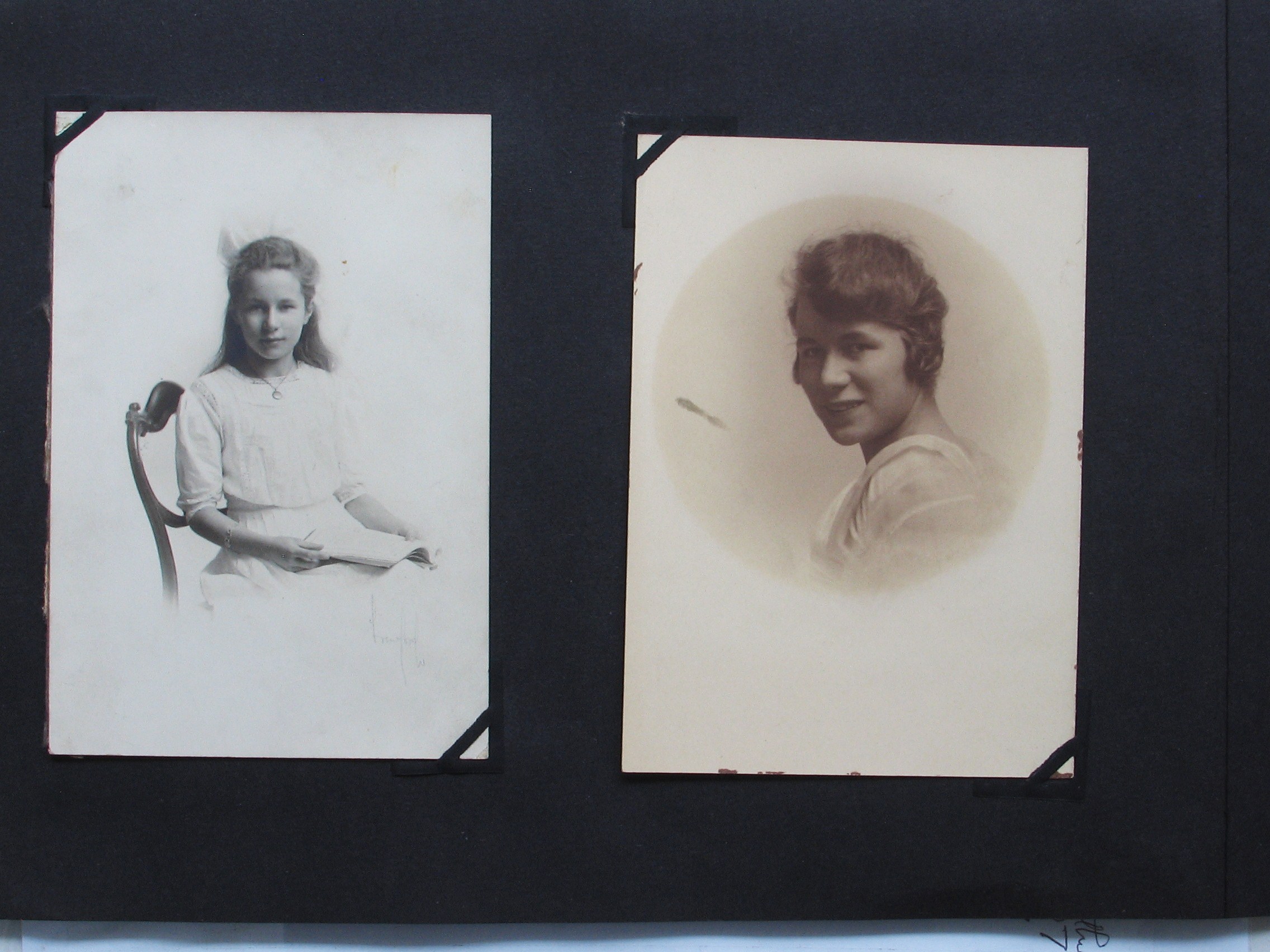
The Trenamans
The Trenaman family name has an interesting history. Apparently at the Battle of Hastings in 1066 one of King Harold’s knights slew twenty Norman soldiers with a battle axe and dagger. He was commended on the field, and given the name “Twentyman” or whatever that works out to in early Saxon/English. Unfortunately, Harold was slain and William of Normandy won the day, but the name continued in various forms, one of which was Trenaman. It appears in the Domesday Book. The coat of arms is a battle axe and dagger on an escutcheon. I remember that my grandfather had the crest in ground glass as a window in the hall of his house. We visited the old house in Hamilton recently and the window is still there.1
Mom told a story about an ancestor who, in the early 1800s, joined the Royal Navy as a midshipman. His father had a ships chandelling business, probably in Plymouth or perhaps Falmouth, on the south coast of England, and was a major supplier to the Royal Navy. The family had many connections and some relatives in Saint John, in the colony of New Brunswick. Life was hard for sailors, and especially for boys who were midshipmen training to become officers. On one occasion when his ship was visiting Saint John, this ancestor/midshipman went ashore to visit relatives and decided not to return to the ship.
This is desertion – a serious offense. Apparently his ship sent the shore patrol (probably the Royal Marines) to the home of this relative to find him. He had disguised himself as an old woman and sat knitting in a rocking chair in the corner while they searched the house. It was a good thing that he was not discovered because the usual punishment for jumping ship in those days was keel-hauling, a horrible punishment which often ended in death.2
My mother’s grandfather (or great-grandfather), Robert (or John) Trenaman was quite a guy. He was born in Devonport near Plymouth, England, in 1798, was described as a ship captain and farmer. He came to Queens County, New Brunswick, probably in the 1820s, married in Saint John to Jane Langton, and had two sons, James and John, and two daughters, whose names are not in our records. In 1838, when they were still fairly young, the mother and the two daughters were drowned in a boating accident on the Saint John River. Robert was devastated at his loss.
He married again in 1841, to Elizabeth Jane Dykeman, and had six more children, three born in New Brunswick, and three after the family had moved to Upper Canada (Canada West) in about 1849. They moved around a bit, but when my grandfather, Joshua Dykeman Trenaman, was born in 1856, they were living in Blenheim Township, near Woodstock, in the village of Drumbo. His mother, Elizabeth, must have died when Joshua was a child, because he barely remembered her. Robert married again to someone called “Julia A” but there were no more children. Joshua and his siblings could not abide Julia, and would not even go to visit their father. Robert apparently became bitter, and cut his children off without a cent of inheritance. He and Julia moved to the United States. He died in 1885 and is buried in Marlatt Michigan.
The Pingles
Joshua moved to Hamilton, and in 1884, married Ida Jane Pingle. They had six children of which my mother was the youngest. She was named Helena Pingle but was always known as Helene.
The Pingles had a German background. They were part of an immigrant group from Schlesweig-Holstein led by William Berczy.3 They settled in Genesee County, New York 4 in the early part of the 19th century. But things were not going well for them in upstate New York, and Berczy read a notice that land was opening up near the town of York (now Toronto), in Upper Canada. He obtained a tract of land in Markham Township, northeast of York which became known as the Berczy Settlement. The Berczy cemetery is on the east side of Kennedy Road, south of Major Mackenzie Drive and just north of there, in a farmer’s field near the road, is the Pingel burial plot with a white stone monument. Time has weathered the names so that they are no longer decipherable, but when I went there with my mother in 1970s the name Pingle could still be made out. My mother used to go that way whenever she could, just to remember her family history.
Grandparents
Joshua was a prominent business man in Hamilton in the early 1900s. He had built up a business making and selling cleaning powders and stove polish. People younger than 60 don’t know what stove polish is because they usually can’t remember cast iron wood burning stoves and kitchen ranges. But the stoves turned black from the smoke and soot and rusted, and the whole kitchen was impossible to keep clean. So stove polish cleaned it up, removed the rust, and gave the stove a clean black finish which wouldn’t burn off as paint would.
He formed a business called Hamilton Domestic Specialties and it was doing well enough by about 1899 that he built a big house on Blake Street, near Sherman Avenue, in what was opening up as a new better district in the east end of Hamilton. He had a glass panel cut with the Trenaman coat of arms and put it into a small window in the front hall of the house. As a child, I remember mom explaining it to me. I envisioned knights in full armour, jousting matches and great banners flapping in the breeze.
When the house was built shortly after 1900, there were farmers’ fields just beyond. The house still stands, little changed from its glory days. When I remember it, it had already been converted into a duplex. Grandmother lived on the ground floor and Aunt Madeline, Uncle Cecil and my cousin Jane lived on the upper floors. I envied Jane, because she had the servant’s quarters on the third floor, which was like her own private apartment. My room at our home was right next to my parents and they heard every sound I made. In Jane’s apartment, no-one could hear what she did—and she was four years younger than I. It wasn’t fair.
Since I was born late in my parents’ life, (Dad was almost 46, Mom was 31,) all my relatives seemed old to me. And three of my grandparents had died by the time I was two. Grandmother Trenaman was the only one I remember. She was very good to me. She seemed a bit stooped and always dressed in mauve and black when I knew her. I called her ‘Grandmother’ (no grandma or granny for her) but her name was Ida Jane Pingle.
There were six children in my mother’s family, including two sets of twins, but only three survived childhood. Harry Clifford was the oldest, born 31st of January, 1886, but I never knew him and when I was young, the family never talked about him—he was our official “black sheep”. Next born were twin boys who died in their beds at an early age from what was thought to be coal gas poisoning5. Aunt Madeline was next, born 22nd of January, 1889, and she had a twin who died at birth. Like almost everyone in our family, she married late, and as a result, her daughter, my cousin Jane is younger than I am. Helene was born 13th of August, 1899 when her mother was about 39.
Mother’s Recollections
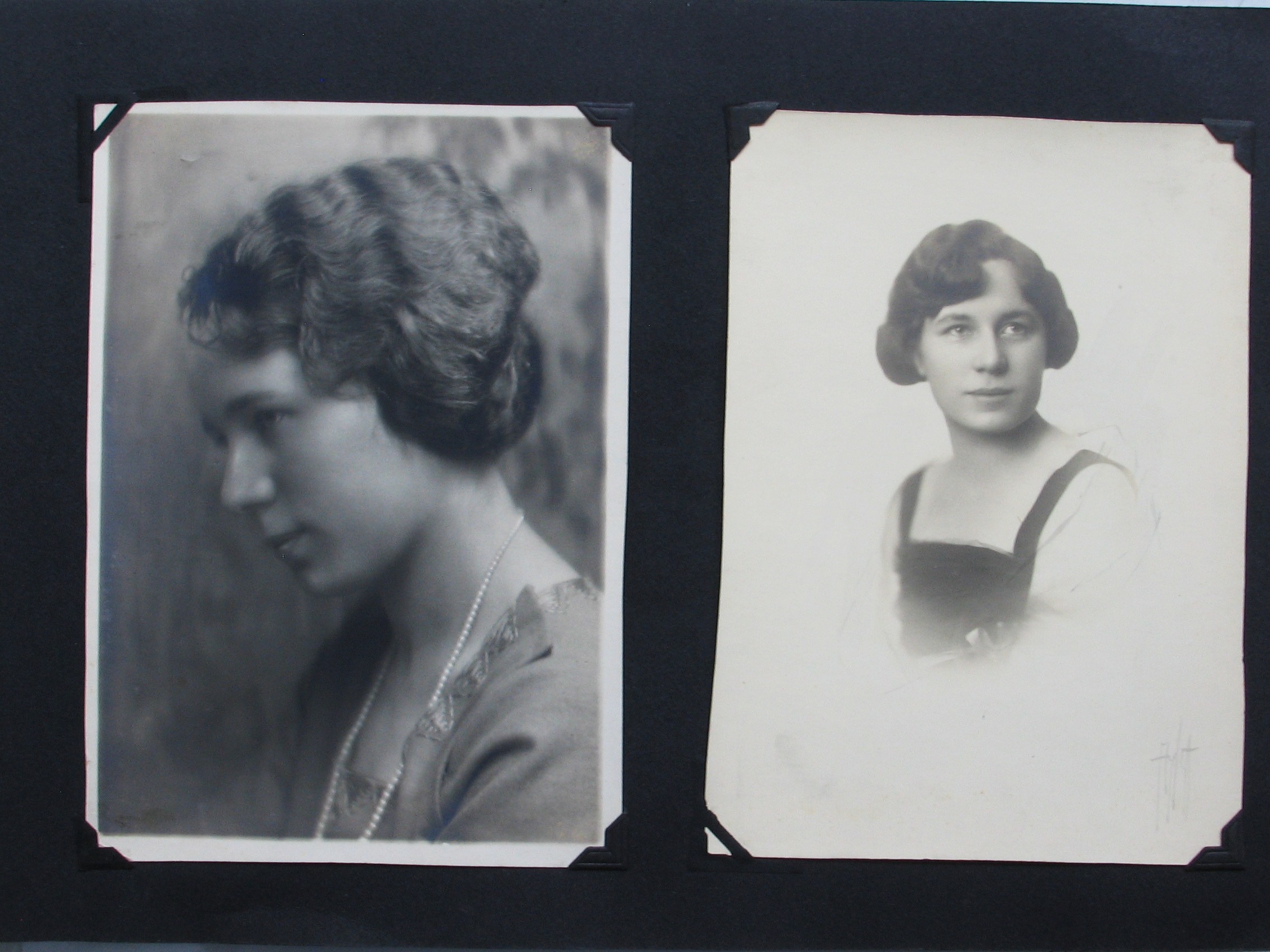
Helene loved to reminisce about her early years. Apparently her mother considered her a sickly child, thin, and prone to every affliction that came along. She must have gotten over this later, because I always remembered her as robust, energetic and healthy. She remembered that one year for Christmas she got a new sled. She tried it out on a nearby hill. The sled suddenly stopped and as she fell off, she ripped all the buttons off her new coat when they got jammed between the slats. She told me that she was afraid to go home, so she was in trouble both for ruining her coat and being late for supper.
The first automobile she saw on a Hamilton street belonged to a friend of her father. It was literally a “horseless carriage”. It was open, with a curved leather dashboard in front, large spoked wheels, and a tiller to steer. There was no radiator. The engine was air-cooled and was under the seat with a chain drive to the rear wheels. One day the engine ran out of oil, overheated and caught fire. Pedestrians shouted and waved at the driver, pointing to the flames under the seat, but he ignored this and drove serenely on, until the engine seized. At this point he was feeling the heat, and he jumped off. The whole car burned. He later complained: “they told me to put gasoline in it, but didn’t say anything about oil.
Helene was sent to “Kingsthorpe”, a small private girls’ school near her home. She had several friends from school with whom she kept in touch all her life.6 The school was organized something like the English public schools and had six forms in the junior school and six in the senior school. She loved languages, but also did well in mathematics. Science was not taught to girls, so it was not offered at Kingsthorpe7.
The First World War broke out on almost the day of her 15th birthday. She remembers that her older brother Harry went overseas and spent time in England. His wife, Jessica (née Cuttriss) had two very small children, my cousins George and Harry Junior. The “Great War” was seen as a heroic venture in 1914 – most people thought it would not last more than a year – and so my mother’s sister, Madeline and Jessie went to England to be with Harry. I think that Jessie took George, but not Harry Junior. My mother looked after him for a while. After less than a year, as the war dragged on, they decided to come home. Cousin Mary was born in December 1917 and married Neil Agnew, a psychology professor at York University. She died in 2018 at the age of 101.
Helene got her matriculation at Kingsthorpe, in the last year of ‘the war to end all wars’. That was a very good education for a woman in those days. People were returning from the war and returning to civilian life. It was expected that she would stay home and help with the family until she got married. But she loved music and had her heart set on a career. From 1918 to 1922, she studied violin and voice at the Toronto Conservatory of Music. She reminisced about her good times in the big city. Toronto at that time was 522,000 people whereas Hamilton was just 114,000 in the 1921 census. She recalls the theatres and the music scene in the immediate post-war period. It really did seem like the war to end all wars.
By the war’s end in November, 1918, Joshua was ready to retire and wanted to turn the family business over to his son Harry, who had survived the war somewhat better than most. The parents then took an extended vacation to Jamaica in 1919. Madeline must have gone with them because she talked about this later, especially about her stay at the old Myrtle Bank Hotel in Kingston.8
When Uncle Harry took over Hamilton Domestic Specialties he had ambitious plans for it. It had provided a comfortable income for the family and during the war years had received several large government contracts. Harry decided to expand. He negotiated a large loan from the bank and began making plans to open branches in several neighbouring cities. At this point Joshua and the family returned from Jamaica. Grandfather was furious, largely because he had been proud of doing it on his own, never running up debts and having a solid if somewhat conservative image in the community. He ordered Harry out of the business, cancelled the bank loans and the other plans. He spent most of the rest of his life paying off the resulting debts.
Harry’s reaction was not recorded. By this time he had three children, (Cousin Mary was born just before the end of the war,) and he moved his whole family to Burlington. There was little contact between Harry and the rest of the family until the mid-1920s when he apparently left his wife and family and took off with his secretary for parts unknown. His wife Jessie went back to her family in Toronto, taking the youngest, Mary with her. George and Harry Jr. came to stay with Aunt Madeline and with my parents. This was such a shame to the family that I was not told about it until many years later when I pestered my mother about the “black sheep”. Then she finally told me a little bit. By this time, I was an adult.
I was told, in the euphemistic terms of those days that Jessie had “died of a broken heart”. Somehow that made more sense to me than the Greek and Latin terms doctors use nowadays. But because I didn’t know all this as a child, I had trouble figuring out how “Frankie” (Frances) and Vic (Victor) Mueller were cousins of mine. In fact, Frankie was Jessie’s sister, and this family had helped out with the children, my cousins, during the time of crisis. She had another sister, Nina. Many years later, I worked with a social worker, Mr. Jim Carson, who was related to us on the Mueller side.
As a child, I was not too aware of things which did not directly impinge on me, and my mother took some pains to protect me from much of this. Afterwards, I thought it was a real disadvantage, because, after I got married at the age of 27, she told my wife, Fran the whole story about the family “Black Sheep” and also incidentally, about the suicide of a wartime doctor friend of my father. I had never been told the details of either of these. I confronted mother on this and she said that when I was young, she felt that I shouldn’t know, and when I was older, she didn’t tell me because she thought that I already did know. It was very puzzling for a child. I always wondered why my cousins did not have a mother or father, and were living with us. But I knew better than to ask. These things were simply not mentioned in nice families.
The Roaring Twenties
The 1920s was an exciting time to be young. It was the days of the flappers, cloche hats, running boards and rumble seats, and a heady optimism about the future. In the arts and architecture, the “Art Nouveau” movement was giving way to what later was known as “Art Deco”. In Germany, the Bauhaus was producing furniture and household interior designs which were revolutionizing the whole concept of modern life. George Bernard Shaw was replacing Oscar Wilde, who had died a decade earlier, as the “infant terrible” of the literary world.
In music, the musical comedy had evolved from the operettas of Offenbach, and Gilbert and Sullivan to the more sophisticated, if equally frothy, musical comedies of Franz Lehar. And new names were appearing, George Gershwin, Irving Berlin, Jerome Kern. In the automotive world, the Model T Ford had put North America on wheels, but now everyone was looking at the streamlined Pierce Arrow, the Auburn with sleeve valve engine and the Stutz Bearcat, the first real American sports car.
The wireless, now called “Radio,” was evolving from the primitive crystal set, into something which the whole family could listen to. And moving pictures had evolved from the peep shows and nickelodeons of the turn of the century to the comedy of the Keystone Cops and Charlie Chaplin, and the epic drama of “All Quiet on the Western Front”. In industry the production line, pioneered by Henry Ford, was producing goods in every larger quantities at ever lower prices, so that many believed that Nirvana had arrived.
Yet this had an ugly underside which did not escape notice. The gulf between the rich and poor was widening. Industries were booming and anyone could make money in the stock market, but working conditions in industry were poor, often dehumanizing, as portrayed by Charlie Chaplin in “Modern Times” High living always on the edge of disaster, had become a way of life for many, as described by F. Scott Fitzgerald in “The Great Gatsby”. But everyone was having such a good time that they did not reflect on these things until the inevitable stock market crash came in October 1929.
Mom’s family spent summers in Port Dover, a small summer resort town on Lake Erie, about 40 miles south of Hamilton. Her parents had a cottage on 2nd Avenue, two blocks from the lake. The young people were at parties or over at the resort hotels for dances. It seemed they never stopped. Friends from Buffalo, the Lindsay’s, spent their summers there. Gladys Lindsay was about Helene’s age, and she married a Buffalo lawyer Nathaniel Norton, about the same time as Helene married my father.
She recalled dances at the Orchard Beach Hotel with the inevitable ‘Mickey’ of rye being passed around under the table so the chaperones wouldn’t see (it was Prohibition time in the US and Canada) and talking with the other girls about the boys who might ask them to dance. When she first invited my father to the family cottage, it was with some excitement that she took him to one of these dances. I remember my mother’s voice grew soft and wistful, and sometimes she would pause for a moment before she went on.
Meeting My Father
Helene recalled a party in Hamilton where she met a young pathologist, Bill Deadman, who had just come to the Hamilton General Hospital. She recalls thinking to herself: “With my luck, I will end up marrying a man with a last name like that.” He was shy and seemed self-conscious about the pock marks on his face which he said were from smallpox he caught in the war. Sometime later, he told her he had tickets to a new musical which was playing in Toronto. It was called “Chu-Chin-Chow” and it was the latest hit from New York and London. It was in the traditions of Franz Lehar and Johann Straus Jr.
She was very keen to see it, but because he was so vague in his approach, she wasn’t sure if he had really asked her to go. She was asked to go out on the same evening by another man of her acquaintance, and in a bit of a huff about the vagueness of the prior invitation, when he called to confirm, she told him she was “busy”. When she realized afterwards how heart-broken he was, she felt terrible and broke another date to accept his invitation the next time—and the next time.
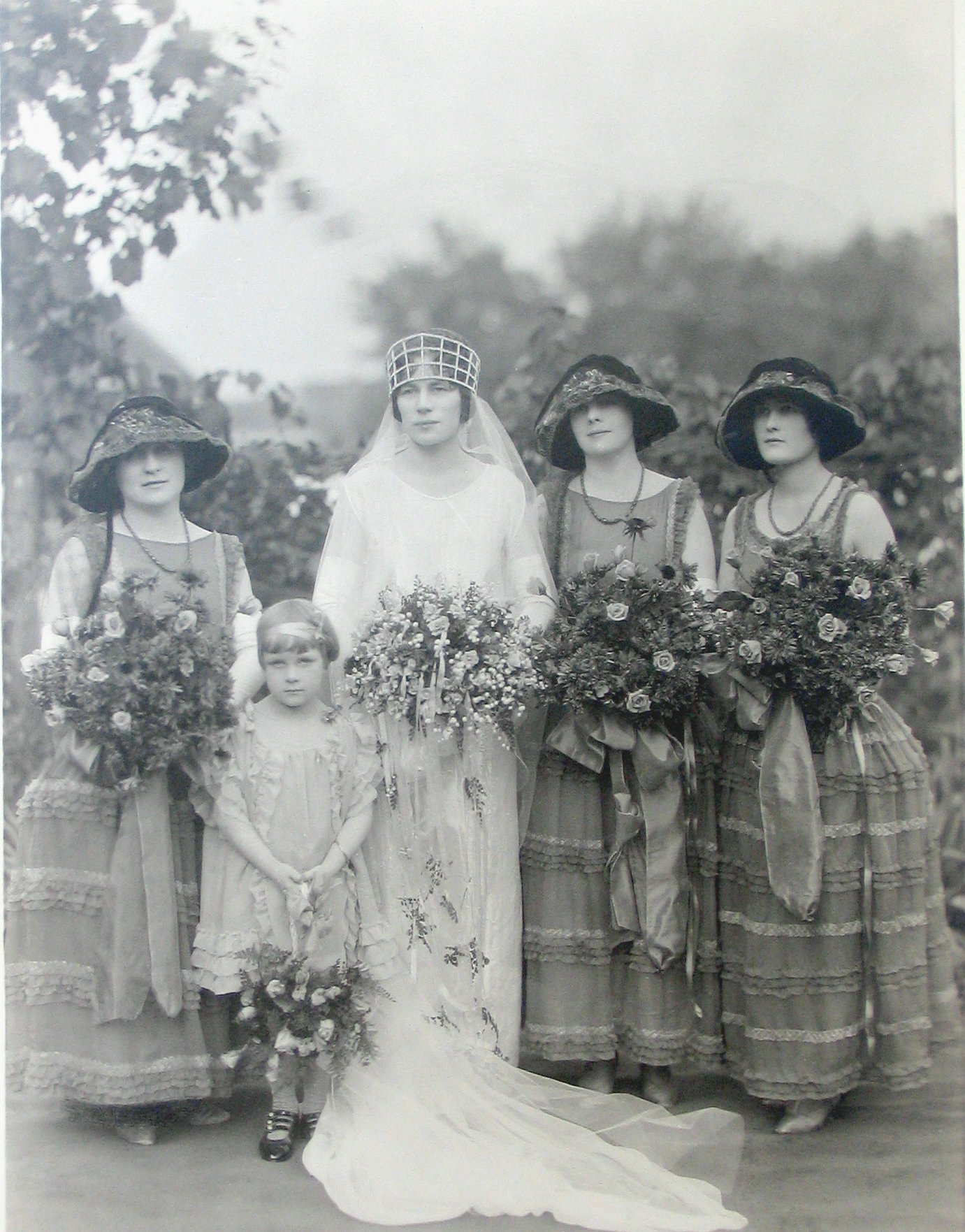
Before long it was time to take him home to meet her parents. She was embarrassed to discover that, because her older sister, Madeline was unmarried, her parents were trying to push the young doctor towards her sister. He didn’t call for a while after that and she became very concerned that he would lose interest in her, but eventually he did. It took a bit of persuasion for her parents to accept that she should be married before her sister. Finally they did accept it, and a large wedding was planned for October 16th, 1923 at All Saints Church in Hamilton. The reception was held at their home at 99 Blake Street.
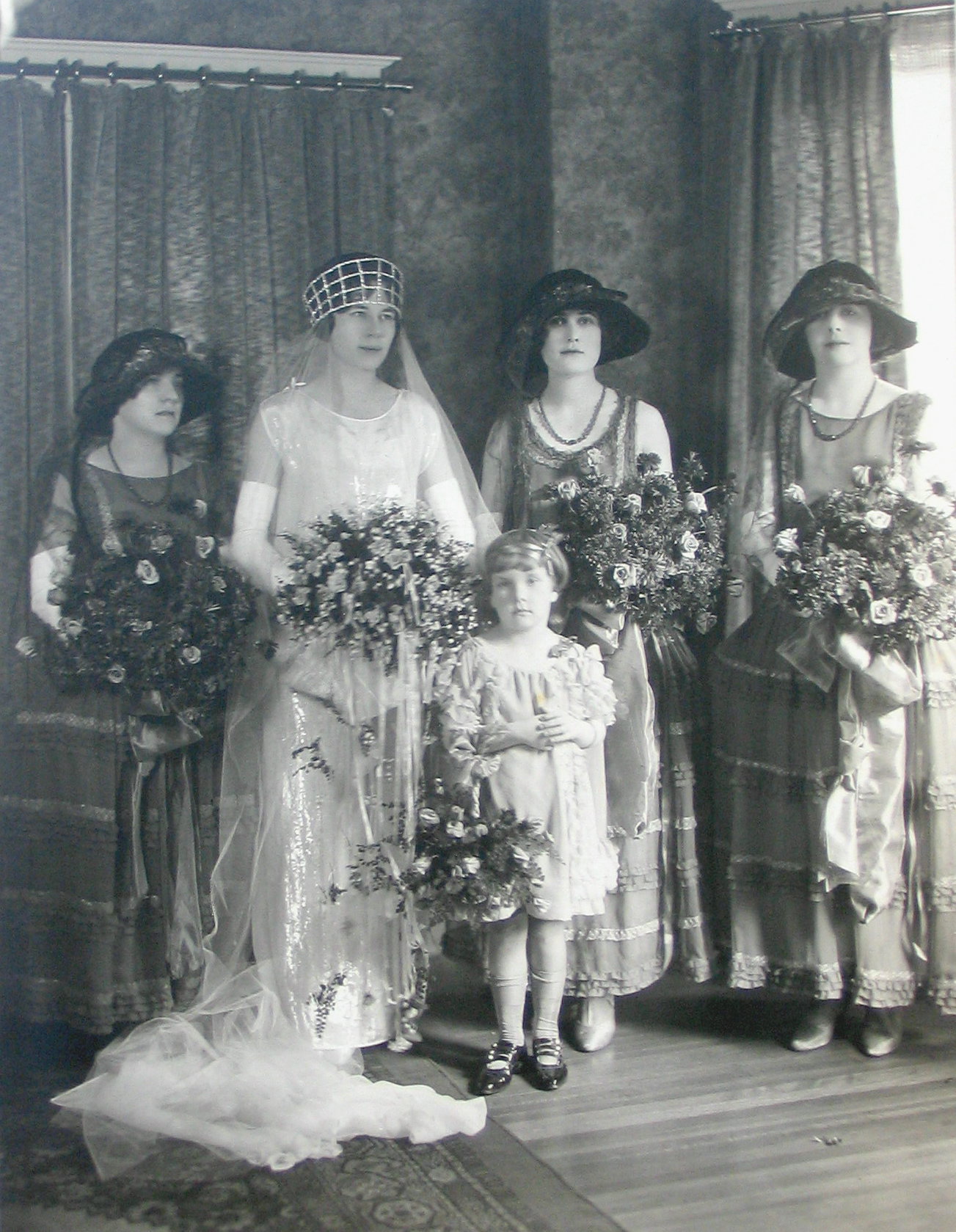
Helene had many friends who had parties in both Hamilton and Toronto. Bill knew most of the physicians in Hamilton many of whom had been in the 5th Field Ambulance during the war. Helene remembers that the first paved highway appeared in Ontario between Toronto and Hamilton, the Toronto-Hamilton Highway, which soon became Highway Number 29. She had first driven her father’s car in 1918, and considered herself a good driver at that time. There were no formal driving tests or driver’s licenses until almost ten years later.
In 1926, Helene had a trip to England. She went by herself because Bill was busy and couldn’t take the time for a holiday. (This was his mantra throughout his life.) She went on the Canadian Pacific Lines and her old album of pictures showed scenes of London, ancient monasteries in Yorkshire and lots of other places. Towards the back of the album were pictures of a side-trip to France where she saw the railway coach in which the Armistice ending the “Great War” had been signed. In her pile of books were guide books to London and Ripon which date from that trip. I remember as a child, sitting with my mother as she looked at the scrapbook she had made. I still have it.
The Motor Car
It is hard for young people to appreciate the difficulties of driving in the early years of the century. There were very few hard surface roads, and most of the others turned into quagmires after a day’s rain. Cars were very unreliable, and so were the tires. Father considered that he was doing very well to travel 50 miles without a puncture. When the Toronto-Hamilton highway was paved in the early 20s, there was one lane of concrete with gravel on both sides. If you met another car, you passed each other with the left wheels on the concrete and the right wheels on the gravel. If it was raining, and the gravel turned to mud, this could easily drag the car down into the ditch.
Helene recalled going to Port Dover to start the season in Bill’s Model “T” about a year before they were married. They were all elegantly dressed for the occasion, my grandmother with a large flowered hat, sat up on the back seat with her two Pomeranian dogs, and two budgies in a large cage, as well as suitcases, hat boxes and whatnot. Mother had a large hat and a duster, and sat beside my father who was driving. He was wearing his new blue serge three piece suit, with white shirt, starched collar and tie.
Punctures were a problem in those days, because changing a tire on the side of the road was very difficult. It often meant taking the tire off the rim and putting a patch on the inner tube, then putting the whole thing together again. Dad’s car had demountable rims which made the whole thing somewhat easier, and my father had two spares on the back, which ordinarily would be enough to get to Port Dover and back. However, between Hagersville and Jarvis, he had had to use the second spare so if there was another puncture, he would be patching inner tubes on the side of the road.
After they went through Jarvis, the oiled gravel surface gave way to clay, and as there had been recent rain, they were churning through wet clay which engulfed the tires most of the way. They got stuck about 3 miles south of Jarvis, and the more they spun the wheels, the deeper the car dug itself in. Finally, my father got out, and asked Helene to drive while he pushed. When the car lurched forward, my father fell on his knees in the mud and the spinning wheels threw even more mud on him. Mother said she was going to stop, but he kept shouting: “Keep her going. Don’t stop! Keep her going ‘till you’re out of the mud.” She recalls that the suit was ruined. Even with the new “Dry Cleaning” process, it never regained its shape. And Helene said that throughout the whole event, her mother sat, like Queen Victoria, on the back seat and never said a word.
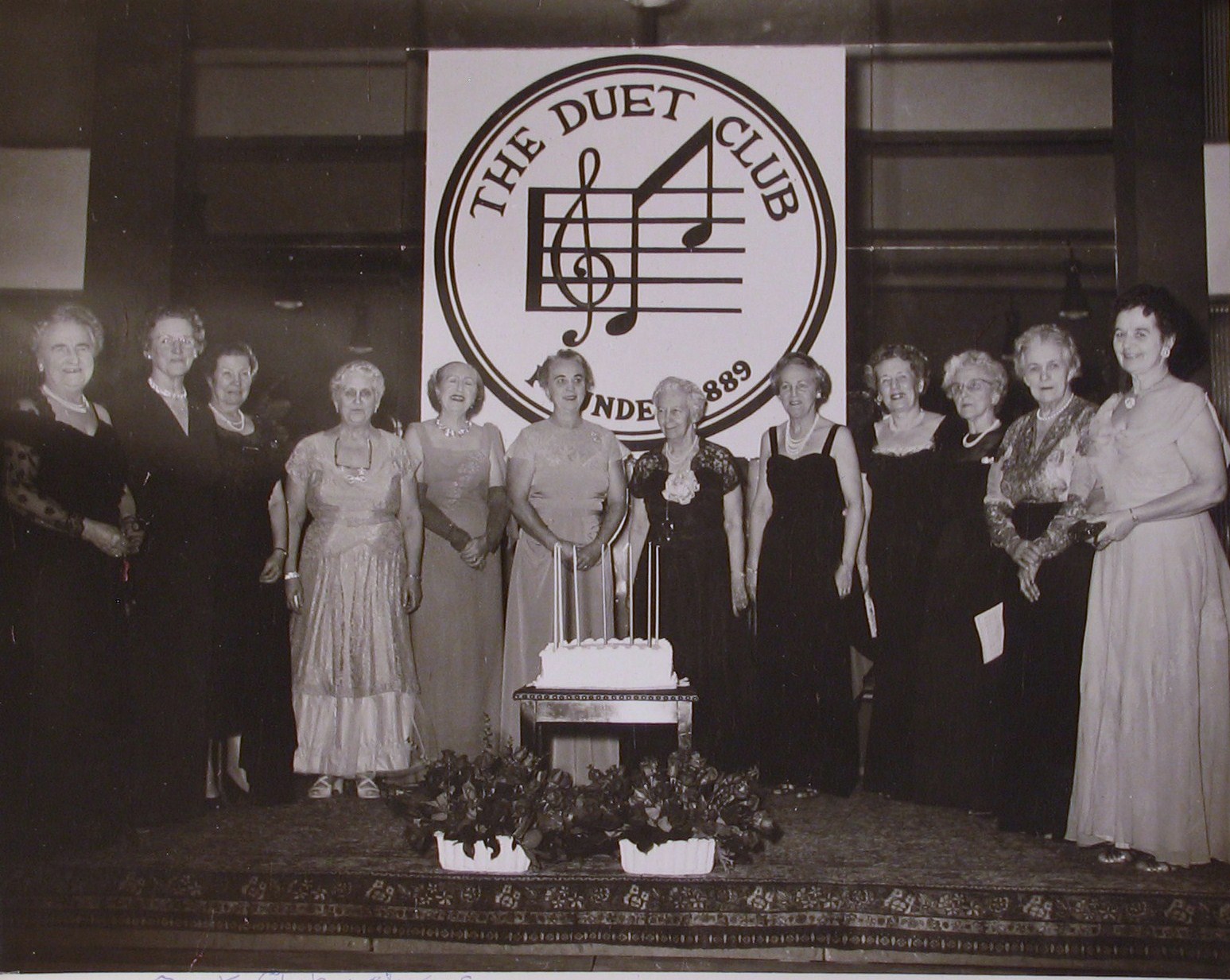
She remembered she and my father going to parties in Toronto and driving back from Toronto on the Dundas Highway (Number 5 Highway). In those days, they still had the Model “T” which my father had purchased in 1919 when he returned from the war. It had a high windshield with a section which could be opened for ventilation. It had planetary gears controlled by pedals on the floor. Sometimes they did not get home until 2 AM, but dad still had to be into the “Lab” early in the morning. Through this she kept up her musical interests. She was a member of the Duet Club and other musical interests in Hamilton.
The Dirty Thirties
In the late 1920s, father was very busy at the ‘Lab’ but they still had time for some fun. They also decided that it was time to have children. Mother told me that they had decided to wait because father wanted to be established in his career and in life before taking on a family. Things were getting very uncertain in 1928 and the stock market began a series of gyrations which ended in the Great Crash in October 1929. At first, the only effect seemed to be the number of prominent business men who were suddenly penniless. But as the effects rippled through the economy, there were rumblings that there would be cuts in salaries and job losses everywhere. In the spring of 1930, Helene discovered she was expecting. I was born in December of that year.
It was not the best time to be raising a family. This perhaps explains why there were so many ‘only children’ in the ‘30s. Grandfather Trenaman had retired from his business before the Great Depression hit, but his retirement investments were much reduced and he died in 1932. By this time, Harry had taken off for parts unknown, his wife, Jessica was sick in bed and would die soon, and Cousins George, Harry and Mary were taken in by different members of the family. My aunt Madeline, Helene’s only sister was just getting married so there was much to worry about.
Bill’s family was also going through difficult times. His father (John) had died in 1929, and his mother (Bel) died in 1932 just over a year after I was born. Helene recalled driving to Beeton in the winter of 1931 with her infant son in a basket in the back seat so that ‘Bel’ could see her grandson. Mother said that in the Hockley Valley, she skidded off the side of a bridge abutment and almost landed in the river. A nice man with a horse and wagon pulled her back on the road and she carried on.
Considering the times in which she grew up she certainly did many remarkable things. She had a fine contralto voice and continued her voice training until she was in her forties. She loved music and introduced me to the classics early in my life so that I always loved them. She was a member of the “Duet Club” which was, and is, a prominent cultural group in Hamilton. She was active in the Girl Guides and became an Area Commissioner for Niagara, resigning only in the 1950s. She left us the Victorian fire screen which they presented to her on her retirement.
She largely designed the renovations to the house in Aldershot and did all the decorating with the help of Theresa, Eric and sometimes me. She created rock gardens around the house. I can remember her taking the back seat out of my uncle’s car so that they could drive up to the nearby escarpment to dig out large rocks to complete the rockery in front of the house. She loved entertaining and we were always having people in the house for parties or visits. I met many interesting people who came to our house – doctors from all over the world, people in political life and people in the arts. Deems Taylor the famous New York music critic stayed with us while he was in Hamilton to adjudicate a music competition. She was always on the go, and life was never dull when she was around.
As we did every year, in 1964 we were all planning to go to the cottage for the Thanksgiving weekend. When we arrived, father told us that mother was in the hospital in Haliburton. She had been getting the cottage ready for us and had a roaring fire in the old Franklin stove in the living room. The chimney overheated and soon there was smoke coming out of the ceiling and on the roof. She panicked, thinking that the whole cottage would burn down. She grabbed a ladder and the garden hose and climbed on the roof and poured water around the chimney. This resulted in more smoke and steam so she decided to go for help.
There was no phone at the cottage at that time so she ran up the hill all the way to the highway before she could find someone with a phone. The fire department was called and was able to put out what little fire remained. They said that her hose work had probably saved the cottage from complete destruction. But mother collapsed and was taken to the outpost hospital in Haliburton. Father was directed there when he arrived at the cottage with firefighters and a lot of mess. By Monday mother was well enough to be released and she came home with us. But this was a shock to all of us.
World Traveller
When my father died in April 1965, she was not yet 66 and still feeling young. She had always had a yen to travel, so she soon adopted this pattern: Early in the New Year she would be off on a trip to a sunny clime or sometimes to the United Kingdom where she had many friends. In 1967, she bought an English car for delivery in the UK and stayed for a year, visiting friends and traveling from Land’s End to John O’Groats. Other years she would plan to be back by late April-early May. She would stay at her cottage in Haliburton for the whole summer with frequent trips back to Toronto so that she could continue her social life there.
The cottage would be closed at the end of October and she would stay with her niece (my cousins Jane and Reed Cooper) or with us. Most Sundays during the time she was in town, she would have dinner with us and Peter, Stephen and Richard got to know her well. About once a month she attended the Sunday matinee of a Canadian Opera Company production with two of her oldest friends. This would make her late for dinner on those nights. She always spent the Christmas season with us and the tradition was that she would take us all out for a Sunday buffet brunch between Christmas and New Year’s. The boys came to refer to this as “Gran’s annual pig-out.” On New Year’s Day, we took her to dinner at Ed’s Warehouse. Then, shortly after the New Year, she would be off on another jaunt to parts unknown.
She was not a timid traveller either. She went all over Europe and North America; she visited North Africa, Australia and New Zealand. On one occasion she flew around the World, visiting friends in England and France, and Audrey Sellers in Brisbane, Australia. In 1975, went with a friend in a camper-van through Mexico. She traveled with the Bishop of Rupert’s Land to a number of churches and outposts around James Bay. She loved the Lord Mayor’s Show in London, and the Chelsea Flower Show. She met people all over the place and often they would be entertained at the cottage over the summer.
Back in the 1950s, my parents billeted a young Air Force Cadet, John Ellington who subsequently became a British Airways pilot and they were life-long friends who visited each other regularly. We visited the Ellingtons when we were in the UK and they visited us in Canada. John died recently in England but we keep in touch with his wife Jayne.
By Camper-Van to Mexico
Her sojourn in a camper-van through Mexico was quite a trip. It started when she visited Rosemary Blanchard, an old friend who was widowed about the same time as she had been. Rosemary lived in Timmins and was about ten years younger than Helene, but in spirit, both were the same age. It was Rosemary who introduced her to the bishop who took her on one of his regular excursions around James Bay. Rosemary had a Volkswagen Camper Van which was completely equipped and she had traveled all over North America in it.
The idea must have come up in the summer of 1974 when Helene was talking about where she would go in the next winter. Rosemary had been thinking of camping through Mexico but when Helene expressed interest, the deal was on. I first heard of it in the fall when we were closing up the cottage. I expressed concern because it sounded rather a lot for a 75 year old to undertake. But mother was determined and I knew that I would not persuade her otherwise. After that, several of her friends called me asking: “Do you know what your mother is doing?” I replied: “Yes!” they said: “Are you going to let her go?” I answered: “You know Helene. How can I stop her?”
On the weekend after New Year’s, Rosemary arrived with her van. When camping, the roof lifted up to give standing headroom, and there was an awning on one side. It had two bunks and a camp cot. There were complete kitchen and bathroom facilities all neatly stowed in the corners. As a final touch, she had had a strongbox for valuables welded to the frame under the floor. The next morning they set out. Over the next three and a half months mother phoned me several times to let me know how they were doing but I did not learn many of the details until she had returned home.
The first night they camped near Cincinnati. The next day, they made it through Oklahoma. They stayed in a motel in the Texas panhandle for three days when ice and freezing rain closed all the roads. They crossed the border into Mexico and headed up into the high country of the Sierra Madre. When they got above 8000 foot elevation, Helene became short of breath because of an old heart ailment and they had to head for lower ground. I had no idea that her heart had been bothering her from time to time—she told me later that she didn’t want to worry me.
Rosemary had friends in Acapulco where they enjoyed the beach for about a week. Then they were off to Mexico City to stay with other friends. Mother found the pollution hard to take, but revelled in the ancient city, the museums, the old colonial churches, Chapultapec and the Zocalo. After that they headed south to Oaxaca10 and explored the area which borders the Mayan parts of Mexico.
I was in a meeting of department heads at Whitby Psychiatric Hospital when I got the phone call. Helene told me that they had been in a craft market in Oaxaca in early afternoon when the van was broken into and completely stripped. All the furnishings, even the car seats and the wheels were gone. Fortunately, the thieves had not discovered the strongbox so their passports and other papers were safe. They had some money with them but not much. I contacted mother’s insurance company and wired her some money so they could survive until they could get the van rebuilt.
After that, they headed into Campeche and north to Merida in the Yucatan Peninsula. On the way, Rosemary stopped to pick up some American college students who were hitch-hiking through Mexico. Further down the road, they were stopped by Mexican police who searched the van for drugs. They did not find any, but there were constant warnings and reports of tourists who had their vehicles impounded and had an indefinite sentence in a run-down Mexican jail for as little as one marijuana cigarette. They were lucky that the students were clean.
They visited several Mayan sites in the area including Chichen Itza and Palenque. Rosemary remembered that she knew Dr. Prendergast, the archaeologist from the Royal Ontario Museum who was digging at Altun Ha, a Mayan site in neighbouring Belize (the former colony of British Honduras). They headed down the Caribbean coast road into Belize. At Belize City, Rosemary managed to phone into the camp where the archaeologists were working. They were given specific instructions how to find the camp along a road hacked through the jungle, and they set out even though by this time it was mid-afternoon. They found the jungle road off the main highway but it was very rough and slow going.
In the tropics, night falls like a curtain and they found themselves in pitch darkness. It must have been scary proceeding along a road they did not know in the tunnel of their own headlights. When they came to a large clearing, they decided to camp for the night and go on the next day. Dawn appears equally suddenly in the tropics. The sun was still below the horizon when there were shouts in Spanish and a loud banging on the side of the van. It turned out that they had camped in the middle of a jungle airstrip and there was a plane trying to land.
They were soon ushered into the ROM camp which was not far away, and shown around the ruins and the archaeological sites which Helene found fascinating. The jungle was all embracing and they were told that they were lucky they were in the van the night before, because there were jaguars and poisonous snakes about that could break into tents or more flimsy lodgings.
From there, they proceeded into Guatemala and then north up the Pacific coast to Rosemary’s friends in Acapulco. After a week on the beach Rosemary persuaded another friend to come with her the rest of the way. Three in the van was tight, and mother said afterwards that it changed the constellation of relationships. She could not keep up with the other two and felt like the odd-man-out. After all, she was ten years older with some health problems so this was also a factor.
They proceeded slowly up the coast, stopping in Mazatlan and Puerto Vallerta. Further north, they took a decrepit ferry across to the long peninsula of Baja California – known as “The Baha”. It is a great sand-bar, dusty, dry and hot, with very little vegetation and not that many people. But the beaches are reputed to be the best in the world – if you can get to them. Helene got to them alright, but the sand fleas also got to her. By the time she got to San Diego about a week later, her legs were swollen and she could hardly walk.
I got a plaintive phone call from mother in early April. She had contacted a friend of hers in San Diego who had taken her in and was nursing her back to health. Meanwhile, Rosemary had continued on towards Vancouver with her other friend, and they then went across Canada, arriving home sometime in early May. When Helene was well enough, her friend in San Diego put her on a plane for Toronto, and I met her at the airport. She was tired and somewhat chastened by her experiences, but triumphant. She had survived what would have been a trial for a much younger person and had enjoyed it to boot.
Her trips after that were much less challenging. When she was at Jane’s, the next door neighbours, Jack and Dorothy Nix sometimes acted as tour guides for the Retired Teachers of Ontario. Mother managed to get on some of these trips. Whenever she was going somewhere, she would study up on the country for months before and by the time she got there, she was familiar with the history, the culture and the geography of the country. Dorothy Nix thought that this was wonderful, but she tried in vain to stop mother from correcting the tour bus guides as they described ancient monuments along the way.
In her last couple of years, she had slowed down noticeably. In the winter of 1981, she went back to England and stayed with friends. She spoke of this as her last trip. That summer at the cottage she was complaining that we were not seeing her enough. She came down early in the fall, and my boys and I closed up at Thanksgiving. By Christmas time she was talking trips again, but on a much more modest scale. Her nephew, Harry had been diagnosed with cancer, and in the winter of 1982 she decided to go to Regina to visit him and his wife Marian. She said it might be the last time she would see him. Little did she know. After that, she visited other relatives in Calgary and British Columbia. She took the train through the Rockies and had a wonderful trip.
But when she got back, I was shocked about how old and tired she looked. I insisted that she see an internist for a complete checkup. He reported that she had had a fairly serious heart attack many years ago and her cardiac function was very compromised. I thought it had to be related to that time at the cottage when she had collapsed after putting out the fire in the chimney. I recalled that she had been going for years with some shortness of breath when she was stressed and assorted other physical problems. But she never wanted to acknowledge them because she never wanted to be “an old crock.”
Active to the End
She had a busy summer planned for the cottage, but after her complete check-up I insisted that she could go to the cottage but that she would never stay there alone. She had some English friends coming to stay with her – Daphne O’Dwyer in late June and Rozi and Michael Stokes with their young nephew in August. I had been seconded to the North Bay Psychiatric Hospital in February so I was busy running to North Bay for three days and then trying to keep my program advisor duties going in Queen’s Park on the remaining two days. However, between Jane and Reed and their two girls, and Fran and my three boys, with me there most weekends, we managed to get the summer mostly covered.
In the fourth week of July, there were Advisory Review Board hearings at the North Bay Psychiatric Hospital and my attendance was mandatory. I had planned to take a week off after that and go to the cottage with mother. My son Richard was at the cottage with his grandmother during that time. The Advisory Review Board hearings were not finished when expected, and would continue until the Wednesday of the next week when I had planned to be away. I changed the plans so that I would be away Wednesday afternoon to Monday morning, but as I usually flew to North Bay – leaving my car in the airport parking garage, the hospital rented a large Ford Crown Victoria for me so that I could go to Haliburton and return to North Bay after the week-end. I arrived at the cottage about 5:30 to find that mother had been in for a swim and she and Richard were planning supper. We decided to go into the local cinema but there was a camp group there and the small theatre was full. We drove back to the cottage and had supper. We went to bed early.
It was after midnight when I woke to hear my mother moving around in her bedroom. She had been feeling unwell with an upset stomach but was unable to settle. I sat with her for a while, but she still felt ill. As a psychiatrist, I got few opportunities to practice my general medical skills, so it took a while for me to realize that this may not be just a stomach upset. I checked her pulse which, surprisingly, was quite slow. I remembered that bradycardia sometimes accompanied a heart attack so I got her in the car and we went into the Haliburton Hospital. By this time it was about 1:30 am.
When the doctor saw her and did an EKG, he confirmed that she had suffered a fairly serious posterior myocardial infarction (heart attack) which, on top of the scarring from the old one was making her heart very unstable. They got it stabilized and she slept for the rest of the night. The next day, she was sitting up in bed and trying to get the rest of her summer organized. Both her doctor and I cautioned her that she could not stay at the cottage for a while and she was upset because she had so much planned. I spent the next couple of days on the phone or running around at her request to reorganize her summer.
Monday was Civic Holiday so I drove back to North Bay that afternoon. I had a busy week ahead but I checked with my mother every day. By Wednesday, she was still unstable and her doctor decided to transfer her to Sunnybrook Hospital in Toronto by air ambulance. This was to happen on Friday afternoon. I called Fran who would see her at the hospital as soon as she arrived and I would take the four-thirty flight from North Bay and be home before six.
On the way in from the airport I stopped at a hotel on the airport strip to pick up a raincoat I had left at a meeting two weeks before. When I got home, Fran was standing in the driveway quite upset that I had taken so long to get home. She told me that the hospital had just phoned to say mother was going in and out of cardiac arrest. I didn’t even get out of the car. We went immediately to the hospital. By the time we got there my mother was gone. For a long time I blamed myself because if I hadn’t stopped for my silly raincoat, I might have made it in time.
She died on the 6th of August, just one week short of her 83rd birthday. The funeral was the following Tuesday, the 10th of August at St. Clement’s Church in Toronto – the church she most often attended when she was home. It was packed with friends and acquaintances, some of whom I’m sure I was meeting for the first time. We even had a couple of people from Sunnybrook who told me that the air ambulance attendants had commented on the fact that all the way down from Haliburton she was sitting up on the stretcher telling them about all her plans for the rest of the summer. She said she had to hurry to get better because the Stokes were arriving at the cottage in time for her birthday and she had to be there to meet them.
It was a time of very mixed emotions. We were grieving of course, but also happy to celebrate a life that was lived to the full – no stinting on anything. She loved people and always had them around her. Her generosity was unexcelled. She was loyal, compassionate and true to her convictions. And she was living her life and planning for the future right up to the last hour. She left a great big hole in all our hearts, which never could be completely filled. But after a bit, life went on, and things happened, and we are sure that is the way she would have wanted it.