Chapter two

Meanwhile, Back at the Ranch!!
Things had not been easy for my father’s family in Tecumseth Township during this time. His father was 61 years old and hoping to turn the farm over to his boys very soon. But his Brother, George was killed in a barn-raising in 1914. And Bert was not well enough to do much work and in 1918, he was back in the Hamilton Sanatorium with a recurrence of the tuberculosis. Eric was working with grandfather to keep the large farm going but it was not easy. To make matters worse, there was a farm depression in the 1920s and the price of crops was very low.
My father returned from the war to find that my grandfather was very depressed. He had had four boys, which would be every homesteader’s dream. Yet at this point, one (My father) had embarked on a city career, one (George) was dead, one (Albert) was too ill to work the farm and the last one (Eric), the farmer, had a birth injury and my grandfather knew that he could not run the farm by himself. To my grandfather it must have seemed like a horrible nightmare. He rented the second 100 acre lot to another farmer and he and Eric tried to keep the first lot going. He soldiered on until he was over 70, but then was persuaded that he must sell the farm and retire.
By this time, my father was settled into his career, and married. My mother recalls the many trips from Hamilton to Beeton. With My father’s help, the family was moved from the farm on the 10th line, Tecumseth Township into the town. It included my grandparents, John and Isabella, my great aunt Christine who was by this time stone deaf, and my uncles Albert and Eric. In 1928, Albert was readmitted to the ‘San’, where he had surgery to collapse his lung. My grandfather died in 1929, over a year before I was born. Grandmother died in 1931, when I was less than a year old. Christine and Eric were left in the house.
The Hamilton City Pathologist
But for My father in 1919, it was back to civilian life.1 He continued in his role as City Pathologist and Director of the Hamilton City Laboratories until his retirement at the age of 71 in 1956. He recalled his shyness with my mother when they first met, and his concern about the disfigurement of the smallpox scars. When I was old enough to understand this, they had faded to a pebbly look, something like the surface of the moon. But they were only noticeable if looked at closely. He said that when he returned from the war, they were still red and splotchy and made him look like he had some strange tropical disease. My mother’s remark was: “I loved him. I wasn’t concerned about his complexion.
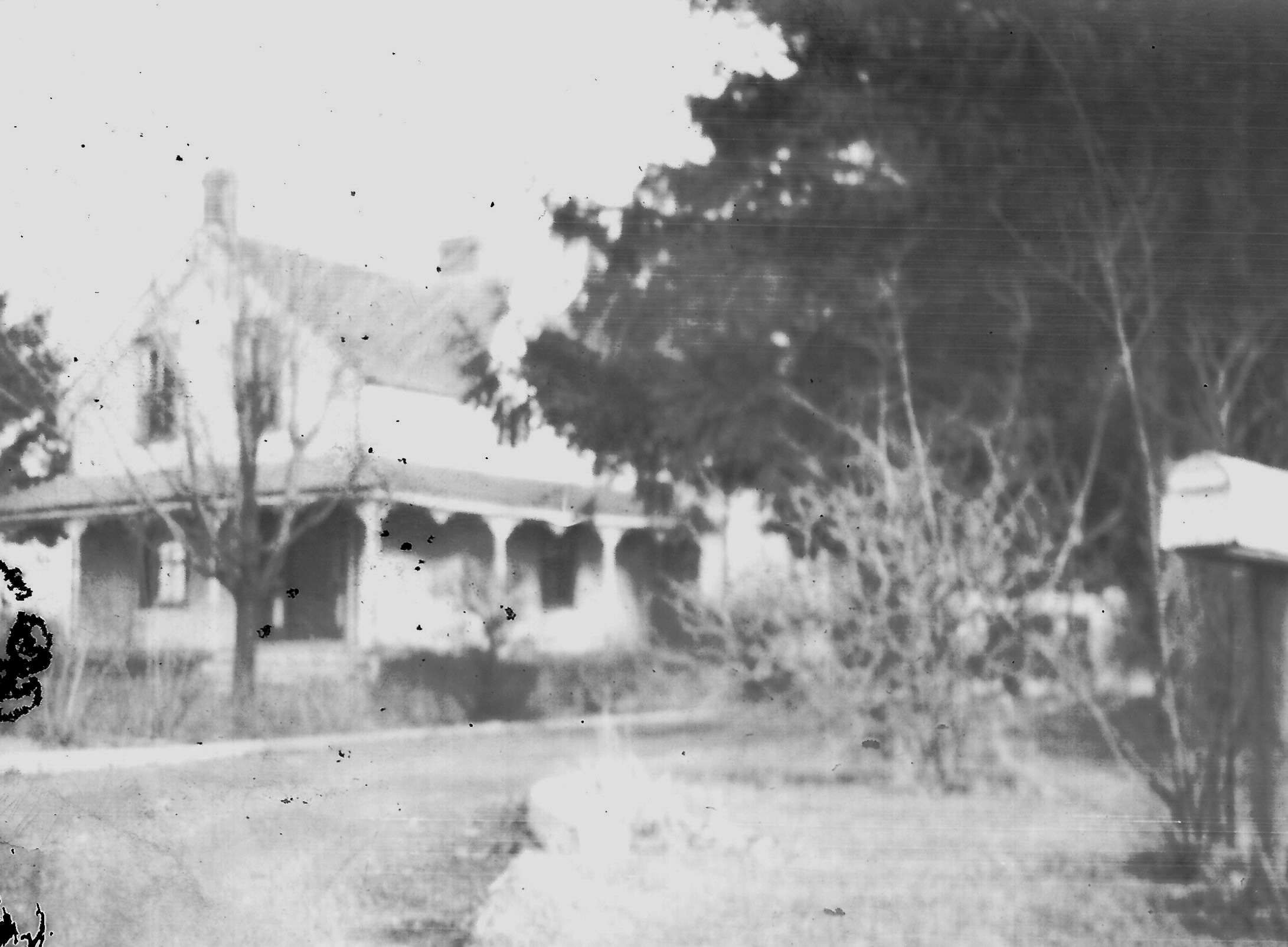
After my parents’ marriage, they settled into life on Delaware Avenue. The ‘Lab’ was very busy and several new staff were hired. During the 1920s, it expanded into the largest, non-teaching pathology department in Canada. My father was in Toronto to meetings on a regular basis, there were parties and receptions. In the summers, Port Dover was a busy social whirl. Both my parents were learning to play golf, which was all the rage in those days. My father told me that he had worked hard to get to where he was and he wanted to enjoy the social events and his involvement in a great many things.
As a result, they postponed having children for a few years, and when they did decide that it was time, my mother had several miscarriages. When I was born, my father was pleased as punch, and would come home early from the lab to see me. In the box of old pictures, I found some shots of me in my carriage beside the house. There was snow in the ground and I was probably only a month or two old. There was nothing else on that film so it appears that my father took the whole roll of film at one time. This was a terrible extravagance for those days but indicated how my father was feeling.
The Great Depression
The Great Depression had started with the stock market crash in October, 1929. By the time I was born, the depression had really started to bite. My father told me that he was receiving a salary of $4000 per annum from the City of Hamilton in 1929. In addition to that, he was doing autopsies for the Coroners, and received fees for that, as well as expert witness fees if he had to give evidence in court. In 1930, he was told that his salary was cut in slightly over half. The City even tried to claim the coroner’s fees as well, but my father informed his boss that he would leave if the City did that so he heard no more about it. But what with all the other problems with his family in Beeton, he found himself in dire financial straits for a few years. By 1932, the salary had been increased to $3000 and by 1933, back to $4000.
When it appeared as if Albert was improving, my father decided to buy a small property as a hobby farm and retirement place. After looking in Binbrook, Greensville and Ancaster, they finally decided on a corner of a farm on Plains Road near Aldershot. It was almost three acres which a local farmer, Mr. Bell, had separated from his large farm for his parents’ retirement. Mr. Bell’s parents had both died so the property was for sale.
It contained the old farmhouse and a small barn, both dating from the early 1860s, and a large chicken-house, a long low building which ran right across the property. My parents thought that it would be perfect for Albert when he was discharged from the ‘San’. But Albert never did get out of the ‘San’. He died there in 1932, and my parents began using it as a country retreat. At about that time, my father began hearing about all the friends which Christine was having up to the house in Beeton, and the large expenses which he was expected to cover. He decided to sell the house in Beeton, and move Christine and Eric to Aldershot where he could keep an eye on things. I remember from a very early age, my mother and I would spend our summers out there and my father would commute to the Lab.
Professional Life
Bill continued to develop the lab with his chief technician Frank Elliot. They established a training program for medical technology that attracted students from all over Ontario. They were instrumental in setting up the first professional organization for training standards in Canada.2 He was a regional expert in forensic pathology and established the Forensic Pathology Program at the Hamilton General Hospital – probably the first formal program in Canada. He continued to lecture and train interns and had teaching appointments at both the University of Toronto and the University of Western Ontario. He has a long list of scientific publications to his credit.
Bill was very active in his professional life. He belonged to many medical and professional societies. He was a member of the Hamilton Rotary Club and the Rotary Christmas Party was a high point in my year. He was also a member of the Scottish Rite of Masonry, but he never talked about that and all I remember was going to the ‘Cathedral’ for a Christmas play. As I grew older, he would sometimes take me to special occasions and I was taught how to behave at a formal dinner party.
As I realized later, he wrote articles on pathology for publication in professional journals and presented papers at medical meetings. Once he made the ‘Miscellany’ column in Time Magazine. I cannot find the clipping now, but as I remember it said:
The Last Word.
A Dr. W. J. Deadman presented a paper on “Sudden Death” at a recent meeting of the Canadian Medical Association.
He was so busy that I don’t think that he took a formal vacation in years. My idea of a holiday was going with my parents to some distant city where my father was in meetings all day, while my mother and I explored the city. If we were really lucky, my father would arrange to stay a few days longer so that we might visit a tourist attraction together. I had heard about people who took cruises or conducted tours, but I had never done that.
In 1932 or ‘33, the Canadian Medical Association Annual Meeting was in Vancouver and my parents went out on the train. My father had bought a 16mm movie camera and I remember the black-and-white movies he took from the train on the way out, a stop at the EP Ranch3 near Edmonton Alberta, some pictures of the new oil wells in the Turner Valley, the Great Divide in the Kicking Horse Pass, pictures of mountains—real mountains, not like the ones we had in Ontario, and the skyline in Vancouver where My father was in meetings all day. On the way back they took a boat to Seattle and then came back on the train through the United States. I remember that movie well because I looked at it many times as a child. Somehow the film was lost in one of our moves but I can still see some of the scenes quite clearly in my mind. This would be my father’s idea of a great vacation. And I still think of it that way.
The Torso Murder
This was perhaps the work by which he was best known, although he played it down, one mention of Evelyn Dick or the gruesome trial gets many Hamiltonians’ hearts stirring some nine decades later.
In summer of 1946, Hamilton was agog with a grisly discovery. Boy Scouts on a hike along the side of the escarpment discovered an armless, legless, headless torso on the mountainside. It was soon discovered that a certain John Dick was missing from his job as a driver for the Hamilton Street Railway. He was married to Evelyn Dick, an attractive young woman who could be described as somewhat of a party girl.
The police searched his house and the house of her father and discovered some evidence of human remains in the furnace. They also discovered a suitcase full of cement and when the cement was cracked open, the remains of a newborn baby. Bill, as the city pathologist, was called in to examine the torso to determine its identity and exactly what had happened. He examined the torso and also the ashes from the furnace. Because of the medical-legal work, he had become somewhat of an expert in forensic pathology and this was his finest hour.
He called in several experts from the University of Toronto including the professor of Dentistry who examined the teeth found in the ashes and was able to compare them to John Dick’s dental records clearly establishing a match. The professor of Anatomy, J. C. B. Grant was able to determine the height and weight and general dimensions of the person from the torso and from these, my father was able to identify the body beyond question and also determine that death was most likely caused by injury to the head. This case alone put him, and his department of Pathology at the Hamilton General Hospital on the map across Canada.
The rest of the story has been documented in the newspapers, in the various crime magazines at the time and in court and legal annals. Just as the convictions were announced and the udge was retiring to chambers to consider them, Evelyn’s lawyer stood up and said: “I appeal.” it was a valid appeal. None of the suspects had convincing evidence of their guilt but there was evidence that Evelyn had been too cosy with some of the Crown’s people. The Judge declared the trial null and void and a new trial was called for February. A lawyer, just a few years out of school, Mr. J. C. Robinette took up the defence of Mrs. Dick on appeal and suddenly he became the best known lawyer in Canada. There were several articles, and at least one dramatic production based on this story. A joke circulating at the time went like this:
“Cut off his head, cut off his arms, cut off his legs—how could you Mrs. Dick?”
This became the title of a play which is revived in Hamilton and elsewhere every decade or so. Ripley’s “Believe it or Not” was also involved. They had an item which said:
“In Hamilton, Ontario, Canada, the coroner is a Dr. Deadman, the chief of Detectives is Sgt. Pinch and there is a firm of lawyers called Lazier and Lazier.”
Like a lot of other articles, this one is less than accurate. My father was never a coroner although many people in Hamilton believed he was. There was a Constable Pinch on the police force although he was not chief of detectives and the name of the lawyers was pronounced ‘La’zheer’. But it sure made a good story.
Many Other Things
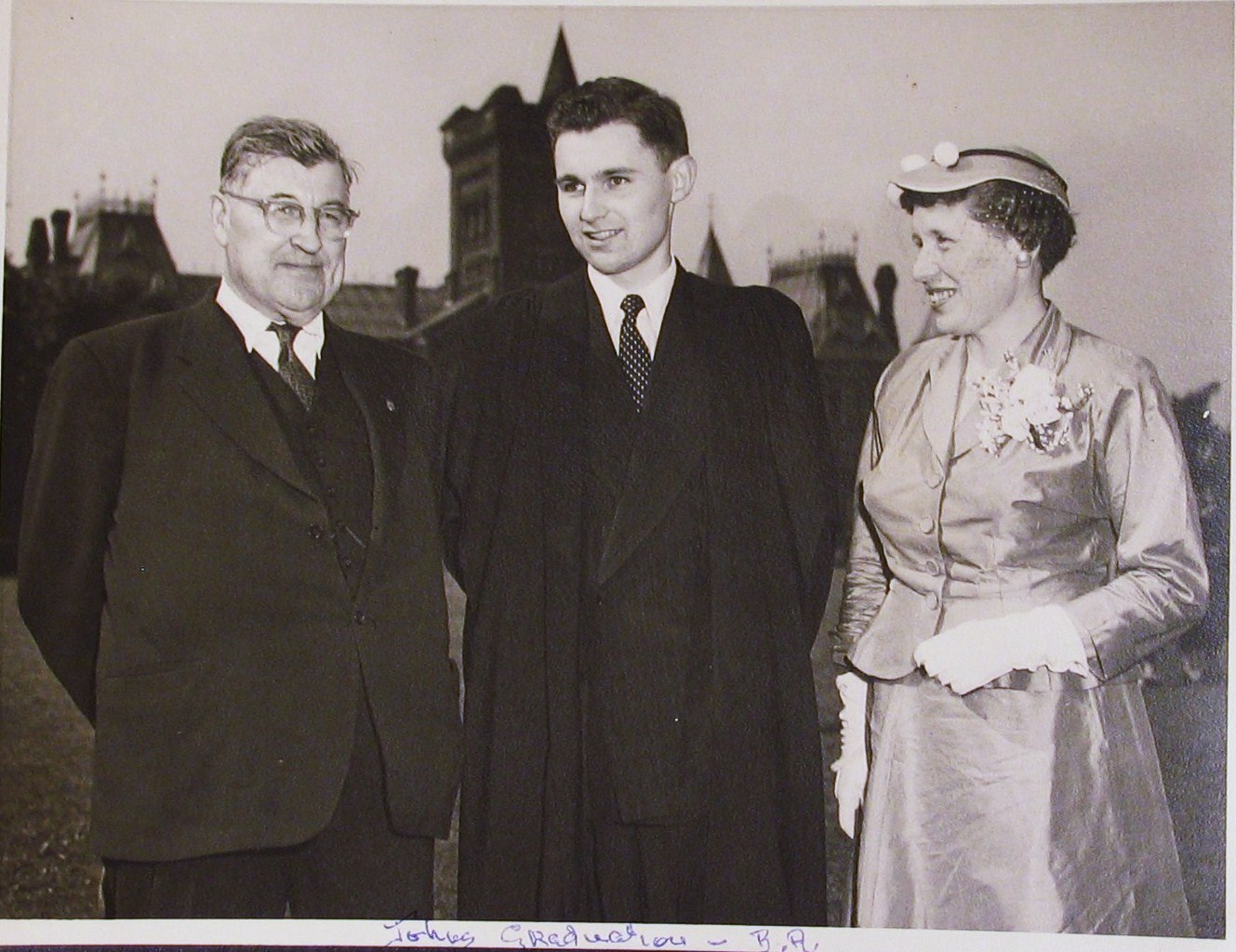
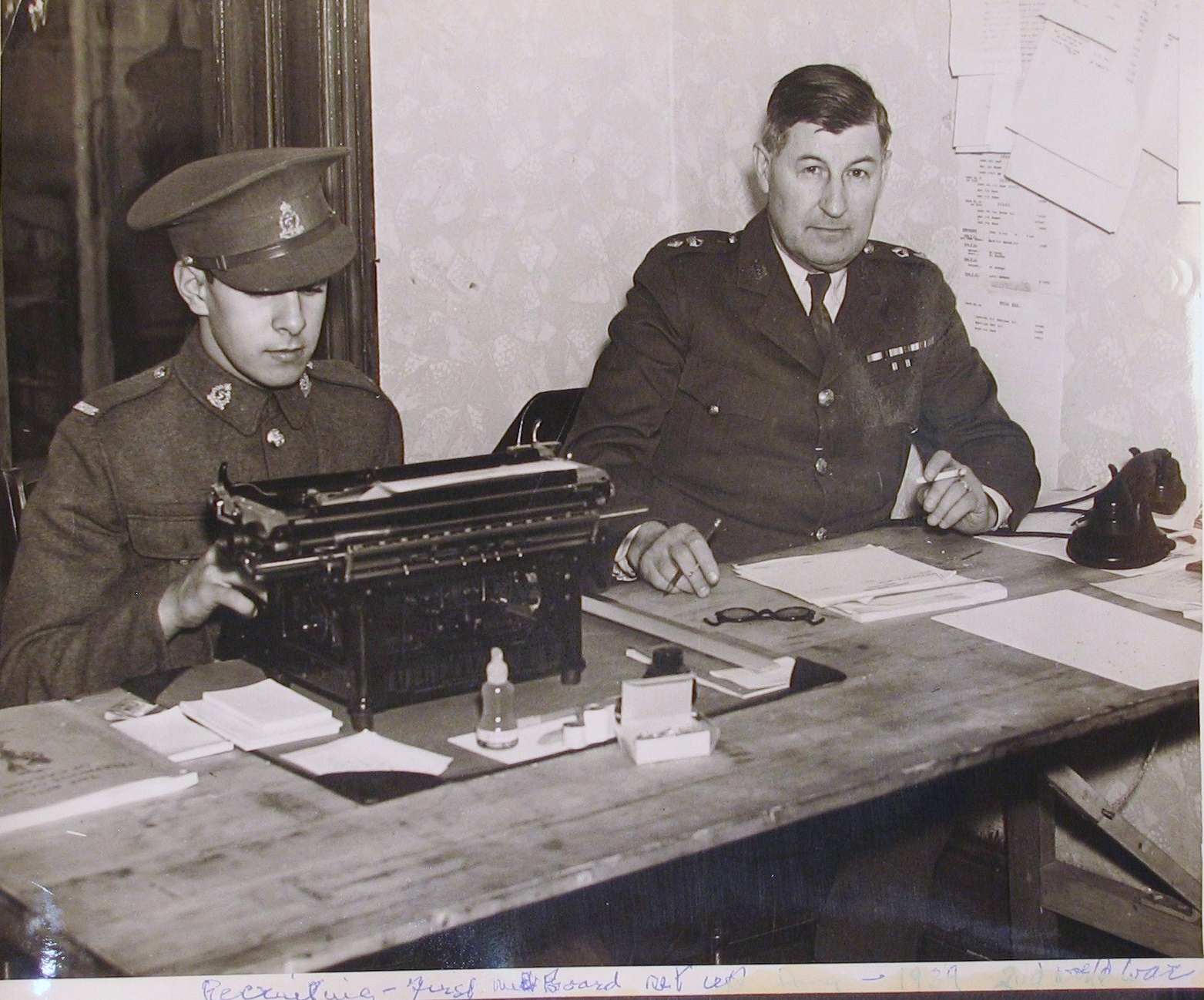
He was active in many areas of life. Besides his work as a pathologist and a medical examiner, he presented and published many articles on pathology, and had started on his memoirs which still remain in his inimitable hand on the backs of old voters’ enumeration forms which he used as scratch paper. He was for many years a member of the University of Toronto Senate. During the Second World War he was the editor of the Canadian Army Medical Journal and retired from his involvement with the reserve military at the end of the war when he was 60. With Frank Elliot, who had been his senior lab technician for many years, he founded and became a sponsor of the CSMLS which still has its head offices in Hamilton. He was a Rotarian and a Mason of the Scottish Rite. At the time of my graduation from University College in 1953, I was the President of the graduating class and he was the President of the U.C. Alumni Association. Both of us were at the head table at the graduation banquet.
Citizen of the Year
He was Hamilton’s “Citizen of the Year” in 1956. Later in the 1950s he was a member of the board of directors of the “Miss Canada Pageant” but dropped that after a few years when he felt that it had become too ‘cheesecake’. He was a strong conservative but as a public servant he eschewed direct political involvement although he was approached once or twice to run for parliament. He was well known as a public speaker and after the war he sent his paper entitled “Canada’s Fundamental Reconstruction” to Prime Minister Mackenzie King who acknowledged it politely.
In January 1950 he reached age 65 and by Hamilton’s pension rules he was required to retire. Unfortunately, there was no replacement in sight and the City and the Hamilton General Hospital had been advertising for over a year. My father was trying to persuade the city officials that his salary of $12,000 was grossly inadequate but it took hard experience to persuade them that this would not be considered a princely salary. The attitude among bureaucrats—and most working people—of any stripe throughout history has been:
“If he is paid more than I am, he’s paid too much.
And if he is paid a lot more, he’s got to be ripping off the system.”
They asked my father to stay on for a year, and he only agreed if they would pay him the same amount as they were offering to prospective replacements and give him his city pension as well. The pensions in Hamilton were a matter of some contention. During the Great Depression, Mayor Sam Lawrence had declared that everybody must contribute to the pension fund but the pensions at retirement were to be capped at $3,000 regardless of one’s final salary. Sam figured that in the ’30s this was a very good wage and no-one should get a pension that was more than that.
As a result, my father came into a salary of $15,000 ($12,000 plus $3,000) which was increased as the salary offered for the position was increased. By the time his replacement was finally hired—at a salary of $18,000 to be increased to $21,000 after a year—my father was advanced also to $21,000, far more than he had ever earned in any year previously. Of course there were some mutterings at City Hall about ‘double-dipping’, but they were so relieved to have a new pathologist for an increasingly busy service that these notions were quickly suppressed.
Post-Retirement
His next job was a two year contract with the Ontario Medical Association to develop a program for the treatment of erythroblastosis foetalis, a condition which developed in babies in the womb who had a different Rh blood factor than their mothers. These babies could die shortly after birth and the mothers could develop incompatibility reactions and become very sick. The only treatment in those days was an exchange transfusion for the newborns of a compatible Rh type. My father travelled all over the province to set up facilities for these exchange transfusions in major hospitals in every region. During that time he commuted from Aldershot every day to Toronto, often having to stay over for evening meetings. He would have been 72 when they asked him to stay on for a third year to complete the project.
During that time, son John was half-way through medical school at Toronto. I had always been close to him and we met for lunch as often as we could in our busy schedules. In the final year of the project, I was a Junior Interne at the Toronto Western Hospital and planning to be married at the beginning of my second interne year. I remember my father’s pleas that I take up a career in pathology. When I demurred, he sent me over to see his friend Claude McLenahan who had been the superintendent of the forensic hospital at Penetanguishine until he retired. He encouraged me to go into psychiatry. I don’t know what he discussed with father but when we met again he assured me that he didn’t really care what I did; but always added: 4
“Whatever you do, don’t be a hack!”
When the OMA project was completed in 1958, he and my mother decided to move to Toronto. They had already converted the Two Acres house into three apartments and had rented two and lived in the other one. Now they rented the upper floor of a duplex in Moore Park and my father began a third career as a consultant to the Attorney-General’s “Crime Lab” at the foot of Jarvis Street in Toronto. It was a wonderful job for my father. Described as half-time, he went in at 10 o’clock, took two hours for lunch and came home about 4. He also had some interesting trips, such as the body in the trunk which had been shipped from Toronto to St. John’s, Newfoundland and was discovered in the truck emitting a peculiar odour. My father did the autopsy in Newfoundland and then accompanied the remains back to Toronto. The perpetrator turned out to be her husband who had disappeared. He was finally apprehended in Cleveland and returned for trial.
And Then….
These were great years for my parents. After my father had missed out on that trip to Mexico in 1958, mother was able to persuade him to go to the Caribbean and to Bermuda where they had not been since their honeymoon. Then my father arranged to go to an international meeting of pathologists in London, England and they toured the British Isles and saw many old friends. In subsequent years, they went to France and Italy, back to the UK and to the Lesser Antilles. This was a real change for a man who seldom took a holiday during his professional life.
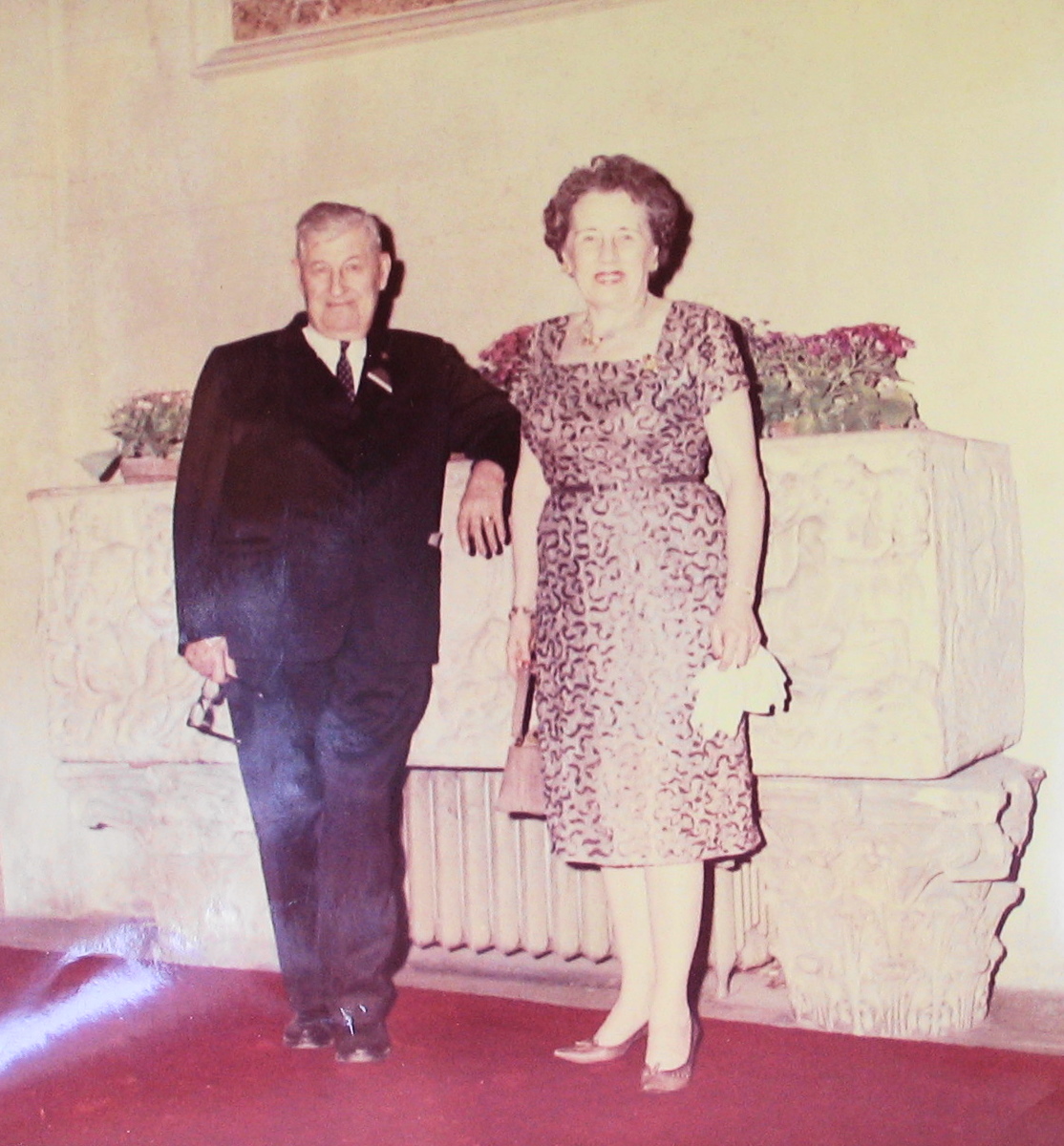
Fran and I were living in Toronto at that time and Peter was born in 1960 and the twins in 1962. My father was never all that comfortable with young children—he preferred people he could discuss politics with. It was very interesting to see him coping with two-year olds. Pretty soon he had overcome his hesitations and was taking them down to the small garden behind their duplex. My mother said that it was a re-enactment of that period after I was born about 30 years before.
Then in the spring of 1964, I noticed that my father was losing weight. He seemed to be having difficulty swallowing and looked unwell. In the summer, I had a long talk with him and he said that he wanted to lose weight anyway and was feeling better. But I said that he knew better than that. He was a pathologist and I wanted him to be checked out for cancer. By this time I was convinced he had stomach cancer, and at that time, it was usually fatal within a year. There was little that could be done about that in those days except provide palliative care. But he remained active, went into the Lab every day, and never complained about it.
At Thanksgiving, my mother was at the cottage where she collapsed and was taken to the Red Cross Hospital in Haliburton. We were so concerned about her that my father’s gradually worsening condition was temporarily forgotten. At Christmas, he took part in the festivities but he looked somewhat wan, and didn’t eat much. By then he had lost almost 40 lbs. In early April, I got a call to come to the Toronto General Hospital. He had apparently collapsed trying to climb the stairs up to the Crime Lab and had been taken to hospital by ambulance.
I was a junior staff psychiatrist at the TPH Day Hospital that year which was in an old church at the corner of College and Elizabeth Streets right across the street from TGH. When I went over to see him, my father was by this time fully awake and seemed a bit shaken by his experience. His physician said that they really didn’t have any idea what the problem was. He seemed to be doing a bit better over the next few days and was having a lot of diagnostic tests including a biopsy of what was described as a blind boil on his back. Then he had another attack of very low blood pressure and went into renal shutdown. Nothing they did could correct this and after a couple of days on April 14th, he slipped away. I came over as soon as the nurses called me and when I got to his bedside, he was still breathing but shortly after that, it stopped. A huge life had come to an end.
Mother drove down to the hospital and joined me in speaking to his attending physician that afternoon. After the usual condolences, I asked him what he thought the diagnosis was. The death certificate would show heart and kidney failure but the cause of those failures was still unclear. My presumption of stomach cancer had been effectively ruled out but the doctor agreed that it looked like a carcinoma from somewhere in the gastro-intestinal system. My mother was very upset with this because my father had assured her that it was not cancer—he was too old for that. His doctor remarked dryly: “You’re never too old to get cancer.”
His attending doctor commented to my mother that she would not want an autopsy. We both looked at each other and Mother said: “We agree that the final diagnosis was unclear but more important; he had probably done upwards of 25,000 autopsies in his long professional career. Somehow it seemed appropriate that he have one to resolve the diagnostic dilemma. The doctor was surprised at this because most families objected. But he had an autopsy.
The next day, the biopsy report indicated that the blind boil was a metastatic carcinoma, with a probable bile duct primary. The autopsy report came two weeks later and was very comprehensive. It indicated a primary carcinoma in the bile ducts within the liver which had invaded most of the liver and the lymph nodes around the oesophagus and other places where the hepatic and systemic blood circulations meet. Then there were secondary tumours in every part of his body—the kidneys, the skin, even the heart muscle, which is very unusual. No wonder that his organs had failed.
Mother and I immediately began to work on the funeral arrangements. It was a huge task because my father was so widely known. We decided that the funeral should be in Hamilton or Burlington so we arranged to have the visitations at the Blatchford and Wray Funeral Home in Hamilton, the service at St. Luke’s in Burlington and the interment at Greenwood Cemetery, where my parents already had a plot. It was just down Francis Street from Two Acres where we had spent so many happy years. We had some of his contemporaries come as Honorary Pallbearers including his good friend and my professor of medicine, Ray Farquharson. Ray was not well at that time and he passed away a few weeks later.
Everyone was extolling the wonderful person that he had been. During the visitation, several people came in off the street to pay their respects. They had met my father at one time or another and had always remembered him. The funeral was on Saturday, 17th of April and it was a cold raw day with soggy wet snow in the afternoon. The Rev. Mr. Heathcote, the rector at St. Luke’s when we lived there in the 1940s, gave a wonderful eulogy and we then went over to the Greenwood Cemetery with wet snow in our hair and down our necks and our shoes squelching in the soggy snow underfoot. My best friend Hugh Geddes arrived from Windsor just as we arrived at the cemetery because the driving from Windsor had been so slow he had not made it in time for the funeral. A depressing end to a depressing day.
My Personal Recollections
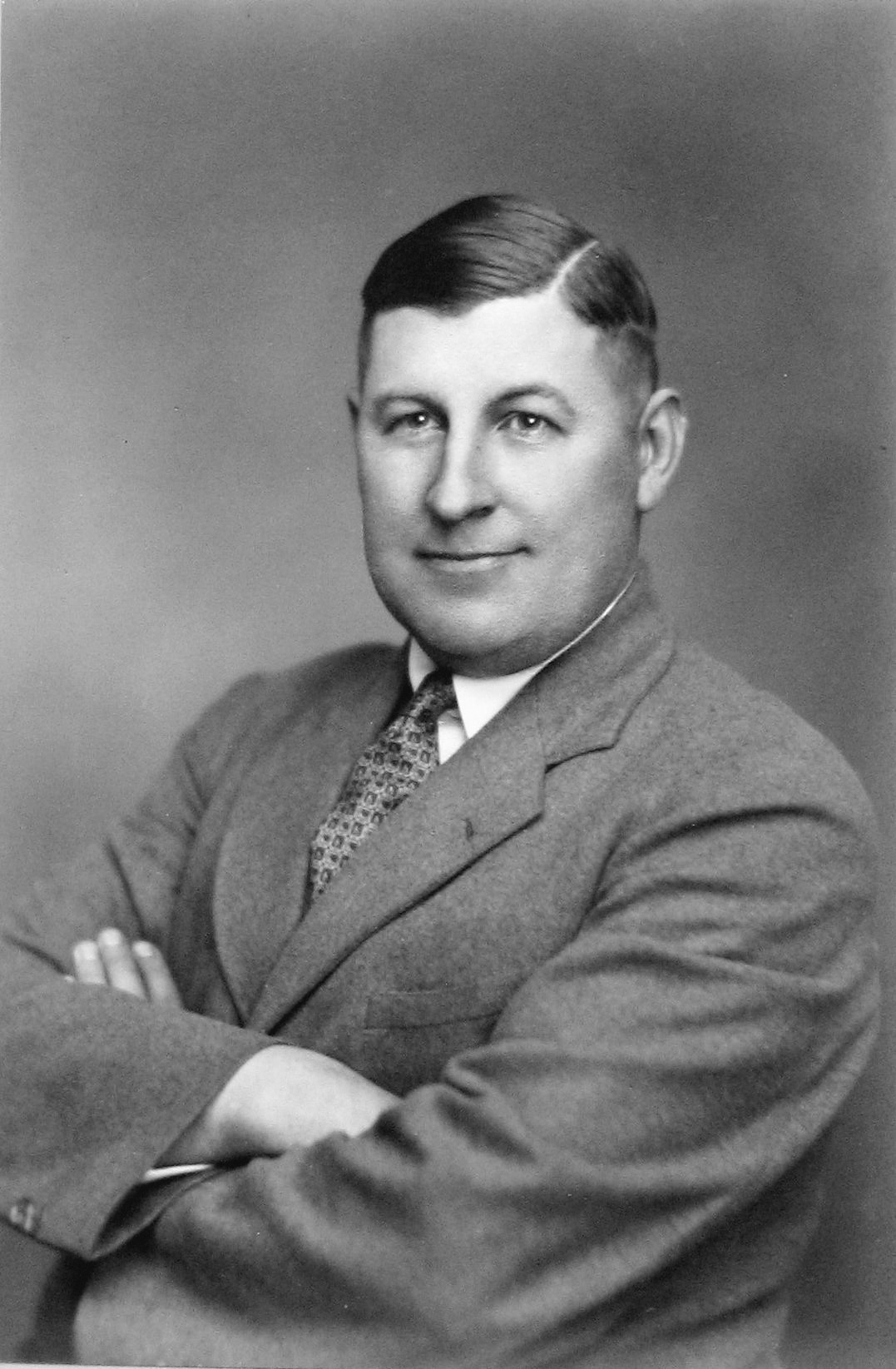
I have many recollections of my father. He was older than the fathers of most of my friends – I was born just one month before his 46th birthday – and he was very absorbed in his work so I do not remember tossing the football, hikes, camping trips or things like that. My mother was more interested in those things and she and I often took walks up the township road to the edge of the Escarpment which was only about a mile or so from our house. My father would go in to the ‘Lab’ every day, including Saturday and a brief visit on Sunday mornings. When I was old enough, he would take me with him. This was always exciting because if there was an autopsy to be performed, I would sit up in his office until he was finished pretending to be the boss of all I surveyed. After he had made his rounds, we would go by the Royal Connaught Hotel and buy a weekend paper. I remember the Philadelphia Inquirer and then the Montreal Standard. He never bought the Toronto Star Weekly because that was a Liberal paper and he was always a strong Conservative.
I remember that he, like most of his contemporaries, was heavy with a protruding stomach which we referred to as a ‘bay window’. I remember referring to my father as fat and my mother indignantly corrected me, pointing out that: “…Your father is stout, not fat!” I asked him about this one time and he told me that as a child and young man he was painfully thin. The image of the successful professional man was well-fed and heavy so he remembers overeating to gain weight while he was overseas and after he returned from the war. He added for emphasis that he did not have heavy bones and his arms and legs were not fat.
I do remember car rides. Whenever he could, father would drive to his meetings or to a conference in a distant city. We loved going for a Sunday drive after he got home from the ‘Lab’. We would explore all the roads around Halton County so I got to know them quite well. He would talk about his days on the farm as a boy so I learned about concessions and doglegs and other things that reflected the countryside of a century ago. Whenever we got close to the big city (Toronto) on one of our drives, I would beg him to go there but he always decided it was time to go home. Later when I was older, we often went to Toronto and I remember the drive along the Lakeshore and the Sunnyside strip amusement park. I also remember after his meeting was over, we would go to Childs Restaurant on Yonge Street and he would order wheat cakes with lots of syrup. I would too.
But most of all I remember his compassion, together with strong ethical and moral beliefs and a strong sense of justice. After his years growing up on the farm, he was very concerned for the ‘little guy’ often struggling with insurmountable problems, poverty, illness and other slings and arrows of outrageous fortune. He was a presence in every group, laughing and greeting everyone around him. He was very much a member of the establishment but was not afraid to take it on when he believed it was necessary. He was very loyal to his friends even when they did not always return the favour. He was serious and sometimes even forbidding. One hesitated to get into a political argument with him. But if you scored a good point in debate, he would acknowledge it gracefully. He dealt with everybody from the prime minister to the shoe-shine boy in exactly the same way, which was rather annoying to some of his contemporaries.
Sometimes even today, some fifty years later, I have a funny feeling that he is still with us. It was impossible to imagine that he was gone for a long time after his death. He still exerts a strong influence on my life. I can only hope that he would say that I was not a hack.