Chapter ONE

Father had a long career as Hamilton City Pathologist and after retirement worked part time at the Attorney-General’s forensic laboratories (Crime Lab) until his death in 1965. He started to write his memoirs when my parents moved to Toronto in 1958, but he died before completing them in 1965. I have started to sort through all that information and will be using some of the material here. I am now trying to assemble his memoirs and this is a brief synopsis. Most of this is done from listening to my father talking about it and also from other family members. We also researched the family tree through local records and early census data.
The Deadmans
The history of the Deadman family name is somewhat shorter and less auspicious than the Trenaman name but is nonetheless quite interesting. It originated in southern England, and is said to have come either from Debenham, which is both a place name and a family name, or from Dudman. Dudman would be the name given to the local laundryman in the village, the one who washed the duds. Some genealogical researchers told us once that the Deadman name means “he who dwells by the river, (or ‘slough’ in one translation).” One supposes that it would be convenient for a washer of duds to live by the river. The escutcheon showed two nondescript fish on a plate. This probably explains why our side of the family never had a ground glass window cut for their front hall.
Both father and I, at different times, traced our name back and discovered that a great-great-great-grandfather in the 18th century, according to the parish records, was born “Dudman”. When he was married, the name was shown as “Deedman”, and when he died, it was shown as “Deadman”. We speculated that in those days, ordinary people could not read or write, all records were handwritten by the clergy, and it would be easy for someone to mistake a “u” in cursive script for two ‘e’s. Once that error was made, ‘ee’ could become ‘ea’ possibly because this spelling sounded closer to the way the family pronounced it.
A generation or so later, the family was living in Alton in Hampshire, near Winchester.1 It was shown in the records that this ancestor was born in Alton, married a woman from Greatham, and settled near Selborne, a village about half way in between. The family farm was close to East Worldham, a tiny hamlet that only appears on more detailed maps. The family emigrated to The Canadas in the 1830s or ‘40s and settled near Carrville, Upper Canada, which is just west of Yonge Street near Oak Ridges in the modern city of Richmond Hill. The name of the settlement no longer appears on the maps, but the Methodist cemetery is still there, and has several Deadman grave markers.
My father’s father, John William Deadman, was born on the family farm in 1853, the seventh of nine children. His oldest siblings had been born in England. When he was old enough to strike out on his own, he realized he would never inherit the family farm, and around Yonge Street, all the good farmland had been taken up. So he went to Tecumseth Township, in Simcoe County. At first he lived with his aunt, Mary Bone in the village of Beeton and worked on local farms until he could get his own.
In 1884, John William2 married Isabella Carruthers (Bel), the oldest daughter of a well-established family in Tecumseth Twp. The family had come from the parish of Applegarth in Dumfriesshire, Scotland only a few years before the Deadmans had come to Carrville. The newly-weds continued to live in Beeton and John worked as a hired hand. Soon they were having children. My father was the oldest. He was born on 11th of January, 1885. When he obtained a new birth certificate as an older adult, he discovered that he had been christened ‘William James Levines’. He further discovered that he was born in 1885, not 1886, as he had always believed. He did not like the name Levines and never used it. He thought that his mother liked it but father didn’t and it was quietly forgotten. His mother called him Willie, his father called him Will, but he preferred Bill and that was how he was known throughout most of his life.
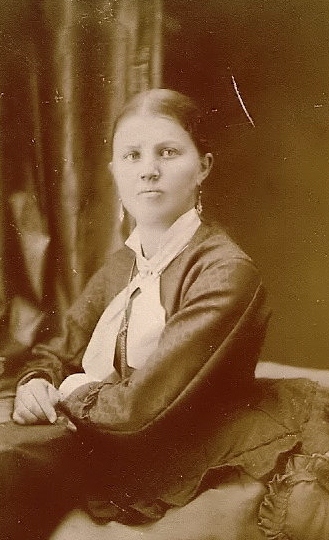
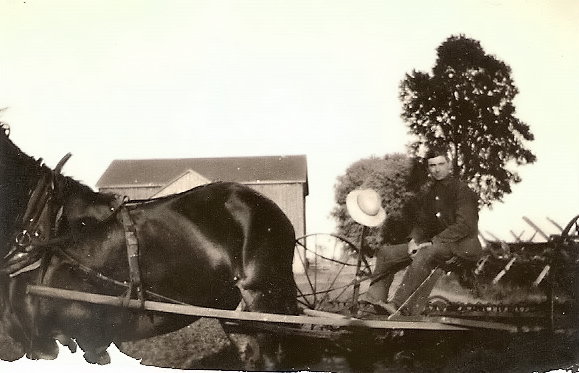
In 1887, another son Albert Edgar was born, and in 1888, George A. The youngest, John Eric, was born in 1891. In that year John bought a half-lot (100 acres) on the 10th line, 10th concession3. The land was bought from William Banting of Alliston, the father of Frederick Banting, (later Sir Frederick) the co-discoverer of insulin.
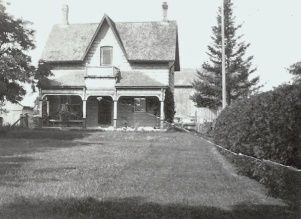
The land was only partially cleared but it had a barn and a small cabin so the next few years were very hard, draining a swampy bit near the creek, and getting a few crops in the ground. Also, in lieu of taxes, local settlers were expected to maintain the concession roads which abutted their property. Because they had a corner lot, on the 10th line, John built a bridge of logs over the creek where it crossed the road allowance. The modern bridge of poured concrete—a recent replacement—has a plaque on it stating that this is “The Deadman Bridge”.
John and Bel began work on proper out-buildings and a solid farmhouse while they continued to live in the small 2 room cabin.4 By the time they were able to build their farmhouse (both barn and house were still standing until a dozen years ago) they had four sons and an extra half-lot, so they were looking after a 200 acre farm with the bush cleared from about half of it. For a farmer, four boys would be a gift from God.
My father remembered all the work, which he undertook from an early age. Settlers in those days would have no money, and would be absolutely dependent on the food they could raise to survive. Only if they had a surplus, could they sell some to get cash. They made everything they needed from materials at hand, and repaired and reused everything. He recalled when he was too young to work in the fields, his job would be to straighten nails and oil rusted hinges which he had painstakingly removed from an old broken gate, so that they could be used again.
His younger brother George was the farmer, and even as a boy, showed the most interest in the farm. My father was much more likely to be reading a book, or fixing something in the barn. Albert was a sickly child and could not work as hard. It was discovered when he was in his 20s, that he had contracted “consumption” and spent time in the Hamilton Mountain Sanatorium. Tuberculosis was a scourge and was viewed in those days very much as mental illness has been viewed more recently. There was no cure, and everyone who contracted it would eventually die of it. But in Albert’s case it was not recognized until later, as a young adult.
This part of the history is quite uncertain because Bill did not like talking about his farm experience and when I asked him about it he provided incomplete details or said he was too young to remember. The farm house that I visited many years later was of a conventional storey and a half layout with an outer shell of concrete blocks made to look like simulated stone. I do not know if this was the original design or a frame farmhouse with the outer walls added later.
John Eric was shorter in stature, and remained “the baby” of the family for many years. My grandmother doted on him, but my grandfather never thought that he would be able to work on the farm. It was not until my father was in medical school that he recognized that Eric had suffered a birth injury, and this explained why he had not developed as well as the others. This degree of illness history and the history of my mother’s family were not at all unusual in those years. In fact, according to my father, his family’s health would have been considerably better than many of his neighbours.
The Carruthers
Bel’s family, the Carruthers, were longer established, were better able to weather the farm depression of the 1890s, and sometimes were able to help out my grandfather’s struggling family. Bel was born in 1860, the fourth of twelve children who in adulthood, were living in many parts of Ontario, Canada and the U.S. My grandmother died when I was a baby so the only one whom I ever knew was her youngest sister, Marcela Christine. She was, like my mother, something of a menopause baby. She was born in 1876, which made her about 15 years younger than my grandmother, and only 9 years older than my father—her nephew. She lived with us when I was a child and, after my mother and our housekeeper, Theresa, I thought of her as my third mother. I had to remind myself that she was my great aunt. I wasn’t always clear what that term “great” meant. When she got after me, I didn’t think that she was so great.
From what my father told me, Christine seems to have been a bit of a rebel. Certainly, her career and her life must have shocked the staid communities of Tecumseth Township. When she completed primary schooling in Beeton, she went off to New York to live with her (12 years older) brother Jim Carruthers. In New York she took training as a “typewriter”5. By the turn of the century, she was living on her own in New York, and had a senior stenographic position with the Prudential Life Insurance Company. She never married, and because people back home viewed her lifestyle with some suspicion, she said very little of it on her infrequent visits home. The story then became a bit confused.
Apparently, she became ill and when she returned to Beeton, sometime after the First World War, she was very depressed, and was going deaf. In those days it was socially acceptable to talk about deafness, but not depression. People used euphemisms such as died of a broken heart to describe neurasthenia or even to cover situations where the person had committed suicide. Another term was ‘recluse’. This one was used to describe Elizabeth Barrett Browning. “She took to her bed, and did not get up for years. She became a recluse.” That did not happen to my great aunt. Despite her deafness, she was very much involved in our lives right up to the time of her death in 1958.
When she returned from New York, Christine was nursed at home by Bel, and after a long time she seemed to recover, but she was stone deaf. Many people speculated that she had an unfortunate love affair and had gone deaf to shut it out. My father thought that she had a form of nerve deafness, and this had caused her depression. I tended to agree with my father. Later, as I look back on it, if she had gone deaf with an infection related to the great influenza epidemic of 1919-20, or developed otosclerosis or a 6th nerve degeneration at the height of what sounded like a very successful career in New York, it meant that she could not work, or for that matter, carry on any part of her lifestyle. I find it easy to understand why she became depressed.
Father’s Recollections
My father never talked about his childhood much. He described it as difficult and unpleasant. One could not afford to be sick. There was hard work, hard work and then more hard work. By the time he was of school age, in the 1890s, a farm depression gripped the land, and the prices for agricultural goods were very low. His father was a good farmer, so they always had enough to eat, but never anything else. My father recalled a family down the road, where there was always a lot of sickness. He says that malnutrition, poor hygiene, and poor family life probably was the reason that none of the seven children lived beyond their mid-twenties. His brother Albert was a close friend of one of the boys in that family. My father was convinced that that was where he had caught the tuberculosis that eventually killed him.
Although the Deadman family was nominally Methodist, Bel raised the children as Presbyterian, as the Church of Scotland in Canada was called. They lived about 5 miles north of the nearest Presbyterian Church in the village of Beeton so in the early years they didn’t get to church very often. My father recalled his mother teaching them about the Bible but did not remember attending church except on special occasions.
In those days, the farming community was divided into “school sections” and there were small one-room school houses to serve each section, usually located at major intersections of concession roads. In theory, they were within walking distance of every farm, but in practice, some children would have to walk several miles, winter or summer, rain or shine. In extreme cases, if the parents could not get the children to school, they simply did not attend. If the local school section could not obtain a teacher, the children might have to walk to the next nearest school, or simply stay home. In cold winter weather in some families, there may not be enough heavy winter clothing for all the school age children, so the oldest would go and bring home work for the younger ones to do.
The primary school, usually referred to as “public school” had 4 forms but because there was a ‘junior’ and ‘senior’ year in each, it was 8 years of schooling.6 The secondary school, known as “high school” also had 4 forms but there was only one year in each, representing 12 years of public education. Beeton did not have enough students to justify a high school, so they added first form and later second form of secondary school and called it ‘continuation school’.
In the fall of 1891, when he was 6, my father started school at School Section #19, Tecumseth. It was located at Alimill about 2 miles north of the farm. He discovered that he loved school. As he was the oldest, he often had to coach his younger brothers if they were unable to go, or if his father required them to work on the farm. He was sometimes held back by his father, but his mother would plead on his behalf, because if he missed too much school, the younger boys also could not keep up. His father regarded the 4th form (eighth grade) as a good education, but his mother wanted him to go on to high school. He completed primary school in 6 years so in 1897 he was starting first form at continuation school in Beeton. When he completed second form in 1899, again his father thought he had more than enough education and wanted him back home to help on the farm. But again his mother pleaded for him and finally, reluctantly, he was allowed to go to Bradford, stay with his uncle Jim Dedman,7 and attend the high school there.
One of the sons, Milton was about the same age as my father and they remained fast friends for the rest of their lives. He had a great time, going home on the weekends. Because Bradford was only about 12 miles from Beeton, he would take the stage coach to Bond Head and his father would meet him there with the democrat8 for the ride home. This short trip would take half a day.
He should have finished fourth form in 1901, but in fact his high school leaving certificate gives the date 1902. This discrepancy was finally explained when I noted that in one of his rough notes on the period he has written “Senior matric – failed”. Apparently he failed a couple of subjects and had to repeat the year, graduating in 1902.
His Career as a Teacher
He had formed an attachment to one of his teachers at the Continuation School in Beeton who encouraged him to become a high school teacher. By the time he finished Bradford High School, he decided to give teaching a try. There was such a shortage of primary school teachers in the country that the 18 month “Normal School” training program could not turn them out fast enough. My father attended a special program called “Model School” which trained them in 4-5 months.9 Bill completed this in the winter-spring of 1903 and began looking for a posting to start in September. By this time, his father was despairing of getting his oldest son back on the farm and again his mother supported this. A teacher at Bradford High School also had supported him in this venture. He completed the training by January of 1903 and began looking for a job.
In the latter part of the 19th century, new settlers were flooding into Dufferin and Grey Counties, an area known as “The Queen’s Bush”. By the time my father got his 3rd class teaching certificate, there were many schools in this area without teachers so he had his pick. He spent four years in Grey County near Walter’s Falls, a small hamlet 20 miles south-east of Owen Sound.
He had two postings of two years each. He was paid $325 for the 10 month school year rising to $460 by his fourth year, and a local family would provide room and board for $2 a week. He would go home as many weekends as he could on his bicycle, but the distance to Beeton was about 65 miles, so he could not go that often. He became quite active in the local social activities and joined a local football (soccer) team.
He would ride his bicycle which was of the modern “velocipede”10 style, with a chain and sprockets. But there was no free-wheeling or brakes, so, on the rough gravel or dirt roads of the day, it must have been a beast to ride. He told me that some of the hills were fierce. It was bad enough going uphill but going downhill, if your feet slipped off the pedals, they might be whirling so fast that you couldn’t get your feet back on them again. All you could do was stick your feet out to the sides, steer to avoid potholes, and hope that you could make it through the valley and slow yourself down on the next hill and then get back on the pedals again. He said that he had many bruises to remind him of the times he didn’t make it. He got a pair of cyclist’s shoes with very sharp toes so that he could stick his toe between the front wheel and the fork to act as a brake. This helped somewhat but was really quite dangerous. He had a couple of times when it threw him over the handlebars.
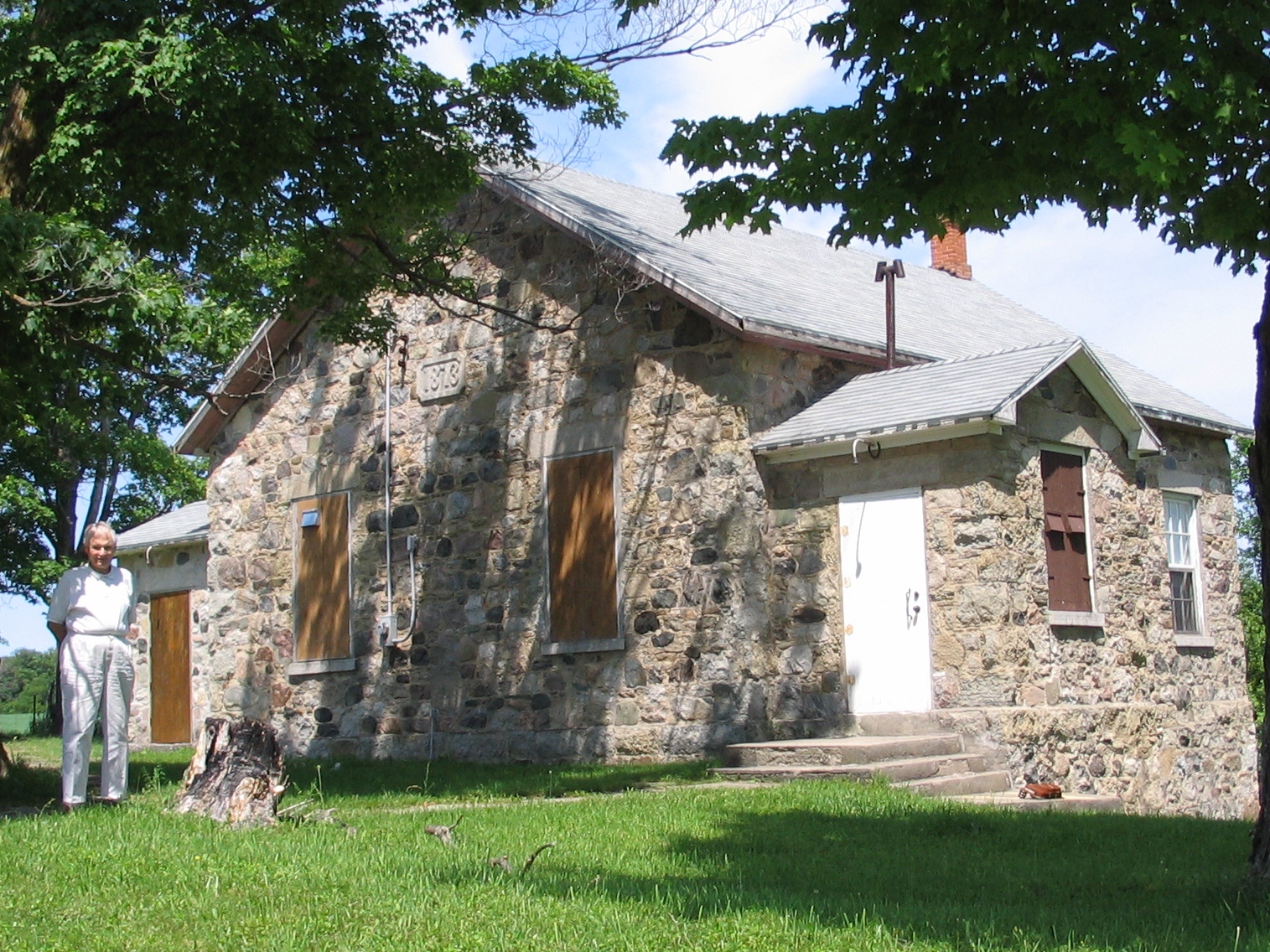
For the first two years he was at a small school at Goring. The final two years he was at the “Blind Line School” north of Walter’s Falls near Bogner.11 He had a picture of his class which I still have among his memorabilia. He was proud of the football team which he formed there. My father was an excellent soccer player in his day, and at one point played for the county team and later on the University College team at the University of Toronto.12 He remembered the pupils fondly and we talked about it. More recently, I remember one time when we were driving near Owen Sound, we went to Walter’s Falls and to another hamlet which he had taught in. We were not able to find the schools but my father said the villages had not changed much. I visited Walter’s Falls recently and was able to find the Blind Line School. The building was boarded up but otherwise looked to be in good condition. Again I had the impression that the area had not changed much in over a century.
Illness in the family resulted in my father getting to know the local general practitioner in Beeton. The doctor had the first automobile in the area. My father realized that he could not teach high school with a 3rd class certificate, so he would have to go to university. The local doctor planted the idea that he should consider a career in medicine. In either case he knew that his father would never be able to support him through university so he saved every penny he could to that end.
He spent his winters teaching school and living with a farm family in Grey County. In the two months summer vacation, he worked on the farm or took summer jobs in the local area. He talked about the big lake freighters at Collingwood and a summer with a relative in Sudbury. In his final summer he took a job on a construction crew that was building the Grand Trunk Pacific Railway through the Prairies. He lived in a dormitory boxcar sitting on the tracks which he had helped to lay. He was paid 10¢ an hour for a 10 hour day, six days a week and there were almost no expenses. By this time, he had over $1000 saved—a small fortune in those days and enough for about four years of university. During his arts course he worked in Falconbridge and had a summer with his uncle Jim in New York. He worked again on the railway that was by this time working close to the Alberta border.
In September 1907, he registered in the Biology and Physics course at University College, University of Toronto. The tuition fee was $75. This was a course which the Faculty of Medicine gave credit for two years of the four year medical program. It meant that after completing the four years of B. and P. and getting a Batchelor of Arts degree, it would only take a further two years to obtain the Batchelor of Medicine degree. If my father decided to go into teaching, the B. and P. degree would give him direct entry to teacher’s college. If he decided on medicine, he was well on his way.
University and Medical School
My father remembered his arrival on campus in the fall of 1907. Convocation Hall had just been completed on the front campus opposite University College (the old original Kings College of 1851 which was the first college of the University of Toronto). The School of Practical Science, later the Faculty of Engineering, was quite new as was the Faculty of Medicine building just across Taddle Creek Road. He rented a room nearby and got a week’s (21) meals from a small restaurant for $2.10. He recalled that there were very few women at the university and most of them were in the Arts courses so he did not see them very much. As a boy from the country, he did not have much experience with the social life which he saw around him, so he attended his classes, did his assignments and talked to his (usually male) classmates.
This was a very exciting time for a young man who had almost never been to a big city in his life. Toronto was growing rapidly; from 208,000 people in the 1901 census, it would reach 376,000 by the census of 1911. There were automobiles everywhere and much new building in the downtown area. Toronto had suffered a disastrous fire in 1906 which had destroyed all the old wooden buildings of the downtown core, and new steel-framed stone or brick buildings were rising apace. The city was rapidly taking on the look of a modern metropolis. And the university was rapidly expanding too.
Bishop John Strachan had founded the University of Trinity College in 1827 as the Church of England college in “The Canadas” with a divinity school. The old building on Queen Street West with its Neo-Gothic architecture was carefully duplicated on Hoskin Avenue in the 1890s, when it became “Trinity College” of the University of Toronto13. Bishop Strachan then founded Kings College in 1846. In 1851 a Romanesque building was erected and in 1853 it became University College in a new federated University of Toronto. Its location near ‘the Queen’s Park’ and near the top of College Avenue (later University Avenue) became the campus for the new university. In the closing years of the 19th century, several local universities or colleges had joined the federated University of Toronto.
The Roman Catholic divinity school became St. Michael’s College. At about this time, Victoria University (Methodist) moved in from Cobourg to become Victoria College. McMaster University on Bloor Street (Baptist), was part of the federated University for a while, but moved to Hamilton in 1930. These five colleges, University, Trinity, St. Michael’s, Victoria and McMaster became the Faculty of Arts, at the University of Toronto. My father’s course in Biology and Physics was really a science course, but since there was no separate Faculty of pure science, these courses were part of the Faculty of Arts. Most of the pure science and mathematics courses were taught at University College which was considered the secular college and did not have a school of divinity.
Trinity and Victoria Universities had had schools of medicine in the 1890s. These were combined with the school at University College to form a new Faculty of Medicine at about the turn of the century. The four that had had divinity colleges retained them. A new school of Engineering had just opened. This was an exciting time to be at the University of Toronto.
The Victorian era with its somewhat puritanical social mores had just ended and the new Edwardian age was well under way. My father remembered that the new ballroom dance steps were just coming in, and University College continued with the Conversaziones in the fall and the spring. But now they were hiring a local orchestra and allowing dancing. Also the University College Literary and Athletic Society was organizing more social functions so by his fourth year he began to go to these events from time to time.
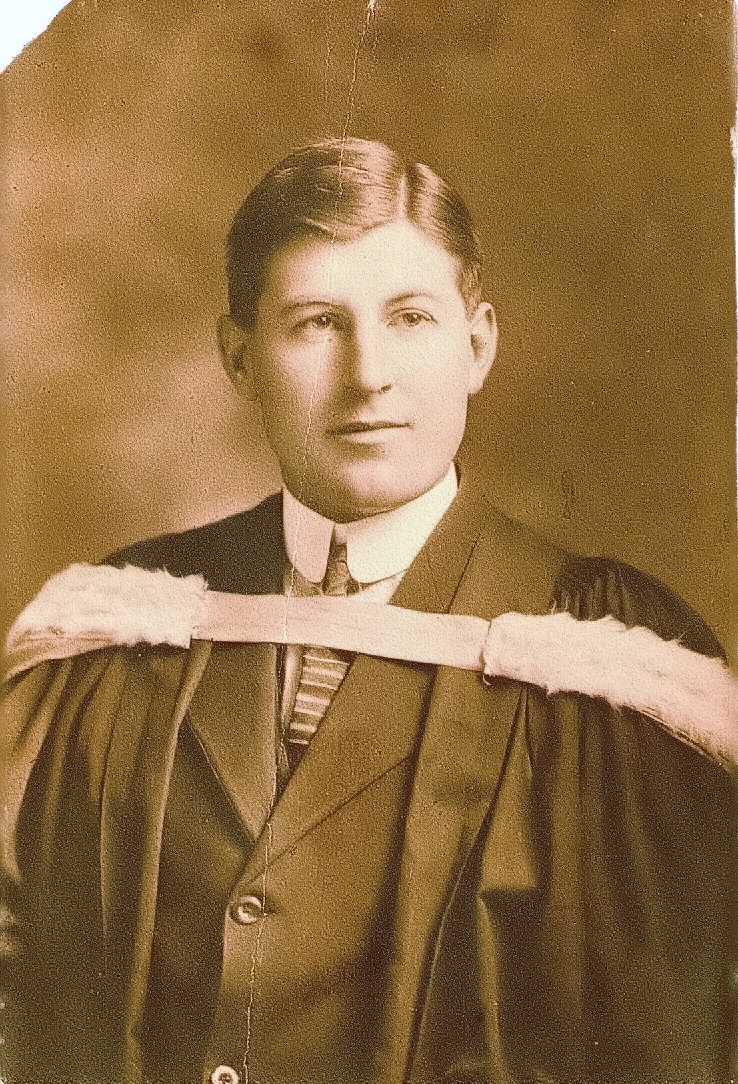
As my father approached his Arts graduation in 1911, he had grown to appreciate all these things. By this time he was determined to take medicine, and had already applied. His father had finally come around and was now supporting his university graduate son. His parents were at his graduation bursting with pride. His further two years in medicine were almost anti-climactic by comparison with his first exposure to university life. His money was almost exhausted, but the farm depression was over, and times were good, so his father was able to help him out in the last year. When he graduated with a Batchelor of Medicine degree in 1913, he felt that his life had really opened up.
We often think that things are changing more rapidly now than ever before. But in that period of the late 19th to early 20th centuries, the apparent change from an agrarian, horse-and-buggy society to a time of automobiles, telephones, radios and aeroplanes must have seemed even faster to the people living at that time than the modern changes seem to us. It all depends where you have come from.
Hamilton City Hospital
In those years there was no requirement that a graduate physician take any further training before embarking on a career. In fact, the requirement for an internship was not formally made a requirement for licensing new doctors until 1958 although by then, they were the expected thing. In 1913, internships were only taken by those who wanted to go on to specialty training—something which my father had not considered up until that point. Most of his classmates were going directly into general practice.
My father felt that he needed more clinical experience, so he applied at several hospitals for an internship. The Toronto General Hospital indicated that his class standing did not warrant a position. The Public General Hospital at Saint John, New Brunswick offered him $50 per month and the Hamilton City Hospital offered nothing a month except free room and board. After talking to his father and to a classmate, Claude McClenahan, he decided on the Hamilton City Hospital. So in late June of 1913 he moved into the old residence building at H.G.H. He was one of only six internes for the whole hospital of 300 beds.
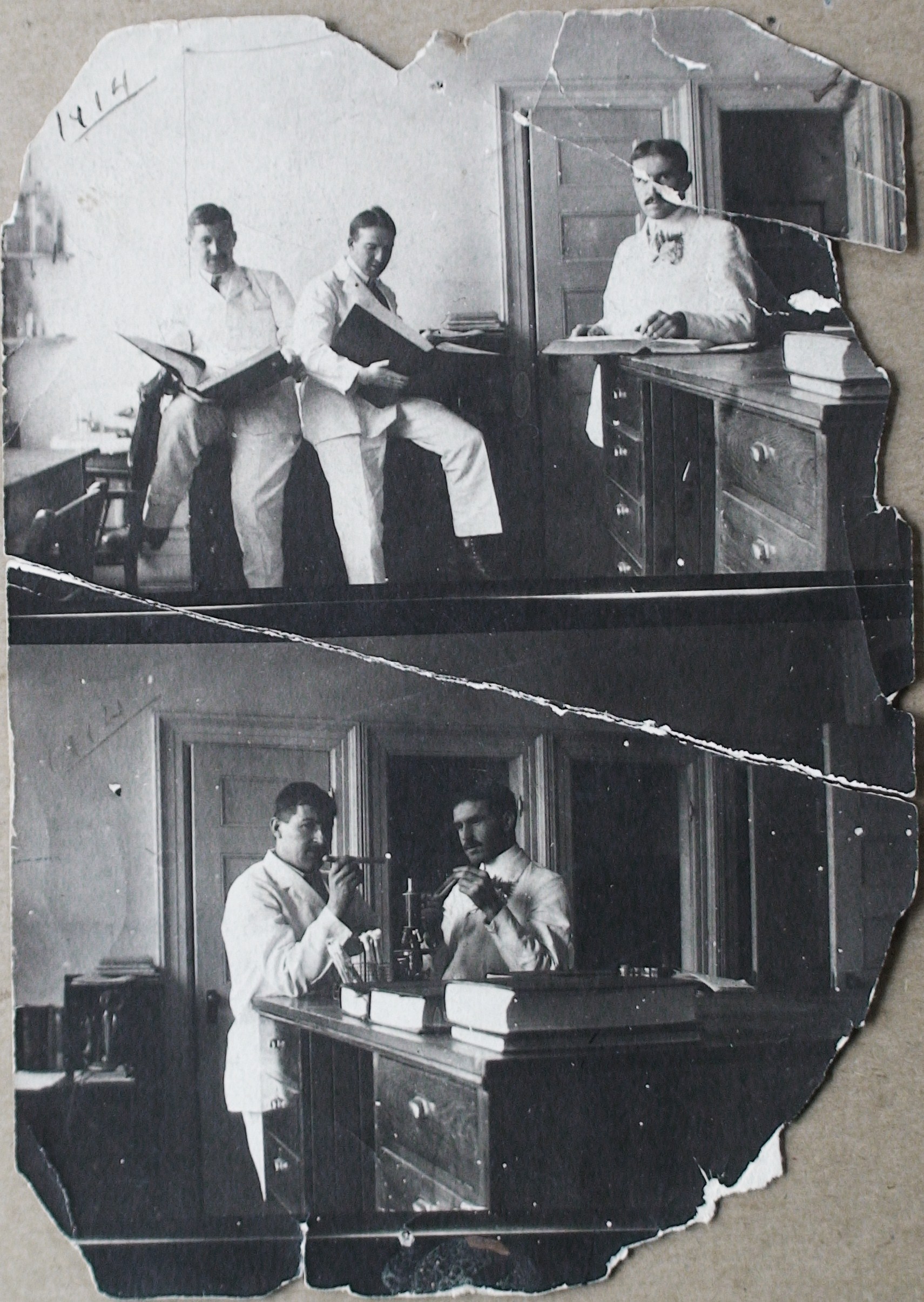
There were six interne services and each interne spent 2 months on each. The isolation ward service also included coverage for the City Laboratory and Public Health Service. While on that service, Hamilton suffered a diphtheria epidemic. The third director of the lab, Dr. Fred Bowman had pressed my father into service to do the masses of Shick Tests, blood smears, and bacterial cultures that were required to diagnose and treat diphtheria. My father found that he enjoyed laboratory work better than ward work. The epidemic began to wane in April of 1914 and Dr. Bowman asked my father to consider taking over the duties of Laboratory Physician. He replied that he would like to do that, but with the increasing emphasis on scientific medicine, he would require some training in pathology and bacteriology. The hospital agreed to pay his way for this training if he would accept the job as soon as he was finished.
He discovered that there was no comprehensive, specialist training for pathology in Canada. He would have to go to the United States or Britain to complete the training. At that time there were only a few specialists in pathology in Canada—all working in university centres. He decided on the 18 month course at Johns Hopkins University in Baltimore, Maryland which would give him a diploma in Pathology and Bacteriology—the best training available at that time.
Further, one of his heroes, Dr. William Osler, the Regious Professor of Medicine at Oxford University had been the first Professor of Medicine at Johns Hopkins Medical School at its inception in 1889. Osler had been born in the village of Bond Head, only about six miles from Beeton. He spent much of his childhood in Dundas, a town that is now part of Hamilton. He had graduated in medicine from Toronto in the 1860s and pursued an academic career. Osler had almost reached hero status in the village of Bond Head and in the Hamilton area.
So in late June 1914, my father was on the train to Baltimore. He likely would have travelled on the Grand Trunk line that had taken over the Great Western Railway, the railway which ran through a corner of his father’s farm. He would have traveled on the Toronto, Hamilton and Buffalo Railway and connected with the Baltimore and Ohio Railway in Buffalo.
Johns Hopkins
In the late 19th, early 20th centuries rapid advances in research, mainly in Europe but increasingly in the United States had ushered in radical changes in medical education and in licensing standards. Johns Hopkins University Medical School had become famous for its innovative and pioneering work under the guidance of William Osler in Medicine, William Halstead in surgery, Howard Kelly in gynaecology and William Welch in pathology. They became known as the Four Horsemen of the Apocalypse. By 1914 they had all moved on to other things except for Welch who was head of the department but often away.
My father found living quarters about six blocks from the hospital. He had many happy memories—beer parlours, baseball games and sailing on Chesapeake Bay. Every morning the lady of the house was out scrubbing the front step, which let down directly on the sidewalk. He recalls that he began doing his work at the university right away, which included doing autopsies in the local hospitals. He remembered Professor Milton Winternitz who later was Dean of Medicine at Yale.
The Great War
In July of 1914 in Europe, the Archduke Ferdinand was assassinated in Sarajevo, and the European nations rumbled towards war. By early August, the great powers, (mainly Britain and France) declared war on Germany. There was a very large German population in Baltimore and my father found that most people in Baltimore were favouring Germany to win. The United States was isolationist in those years so it seemed to him that people were sitting back, like fans at a sporting event cheering on their favourite team, but otherwise, unconcerned with the outcome.
By early November, he was so fed up with the situation that he dropped out of the course and returned home to join up. The Fifth Field Ambulance was organizing in Hamilton at that time under Lieutenant Colonel George Devey Farmer of Ancaster. Bill found that all the physician slots had been filled so he was not offered a commission on joining but was given the rank of Staff Sergeant with a promise of a commission as soon as possible.
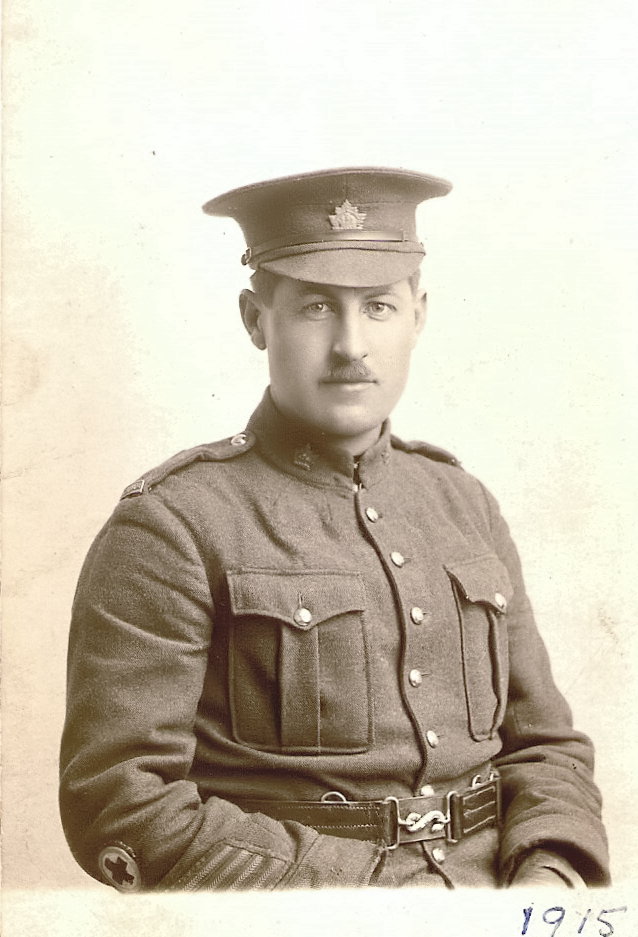
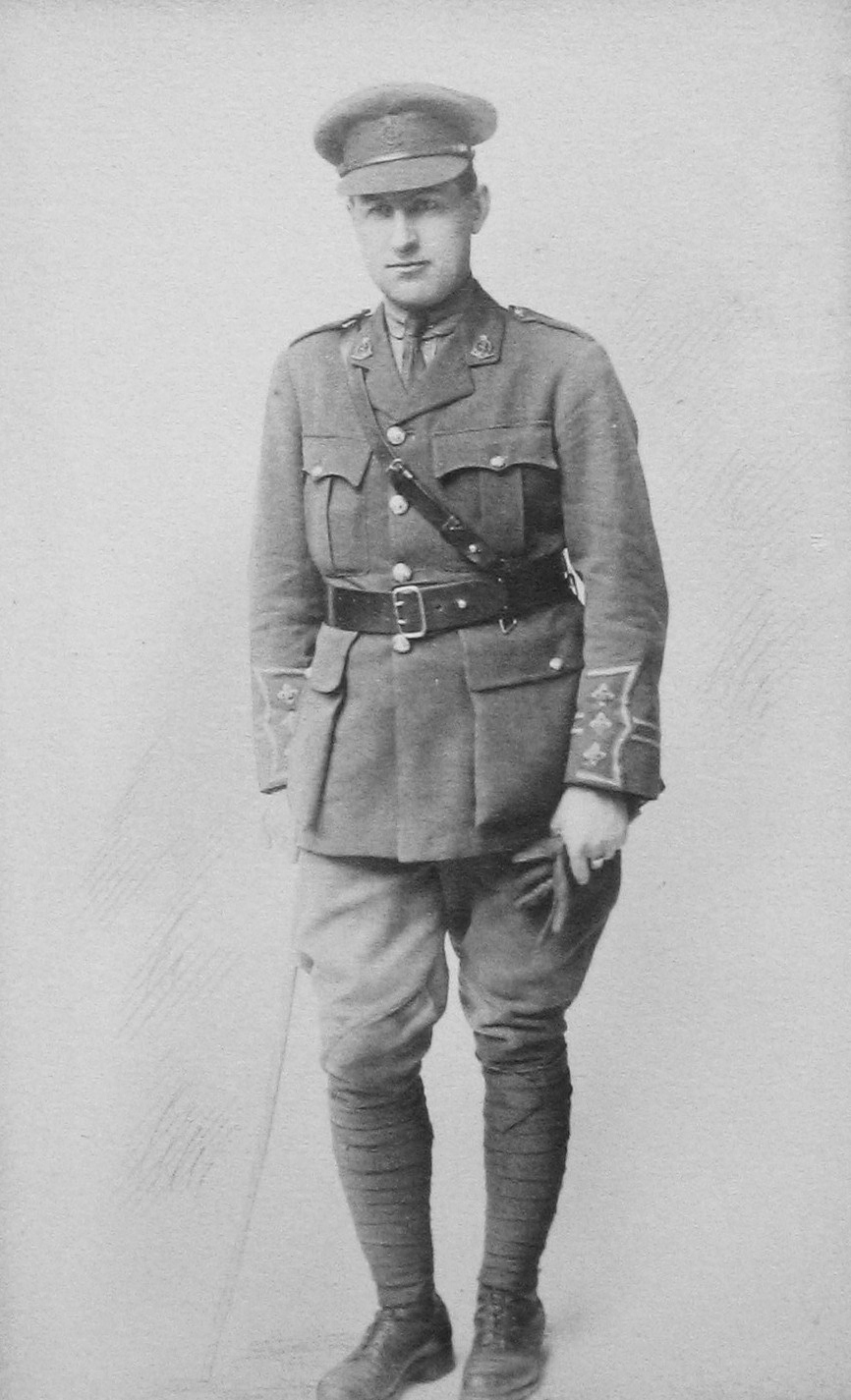
The 5th Field Ambulance14 went to the University Street Armouries in Toronto for basic training in late November.15 It was announced that they would be going overseas in April. They embarked from Halifax on the Northland on April 18th landing at Avonmouth, near Bristol on April 28th. Bill described the “cute little English train to Sandling Camp, the British Army base near Shorncliffe near Folkestone, where the colonial troops from all over the Empire were being formed up.
In May, a British officer from the Royal Army Medical Corps spoke to physicians in the Canadian Army, offering a one-year secondment to the RAMC with the rank of Lieutenant. British and colonial troops were going out to places like Suez, Greece and Macedonia, but the Canadians were continuing their training or going across the Channel to the trenches in France. Bill signed up for this, and within two weeks was commissioned in the RAMC. After being outfitted in London and a training program for RAMC officers he was assigned to the Gallipoli campaign. Soon he was at Devonport boarding another ship with Anzac troops through the Mediterranean to Alexandria and the base hospital in Port Said at the north end of the Suez Canal.
The ill-fated Gallipoli campaign near the Dardanelles, in which so many Anzac troops lost their lives, was just over. The casualties were terrible. Bill described that they had to set up tents in the desert to accommodate them all. But much of my father’s work was not with war injuries, but with tropical diseases. He worked with a British officer, Dr. Phillip Manson-Bahr, who was only a few years his senior. Phillip was the son of the famous Sir Patrick Manson, who had founded the London School of Tropical Medicine. They became fast friends.
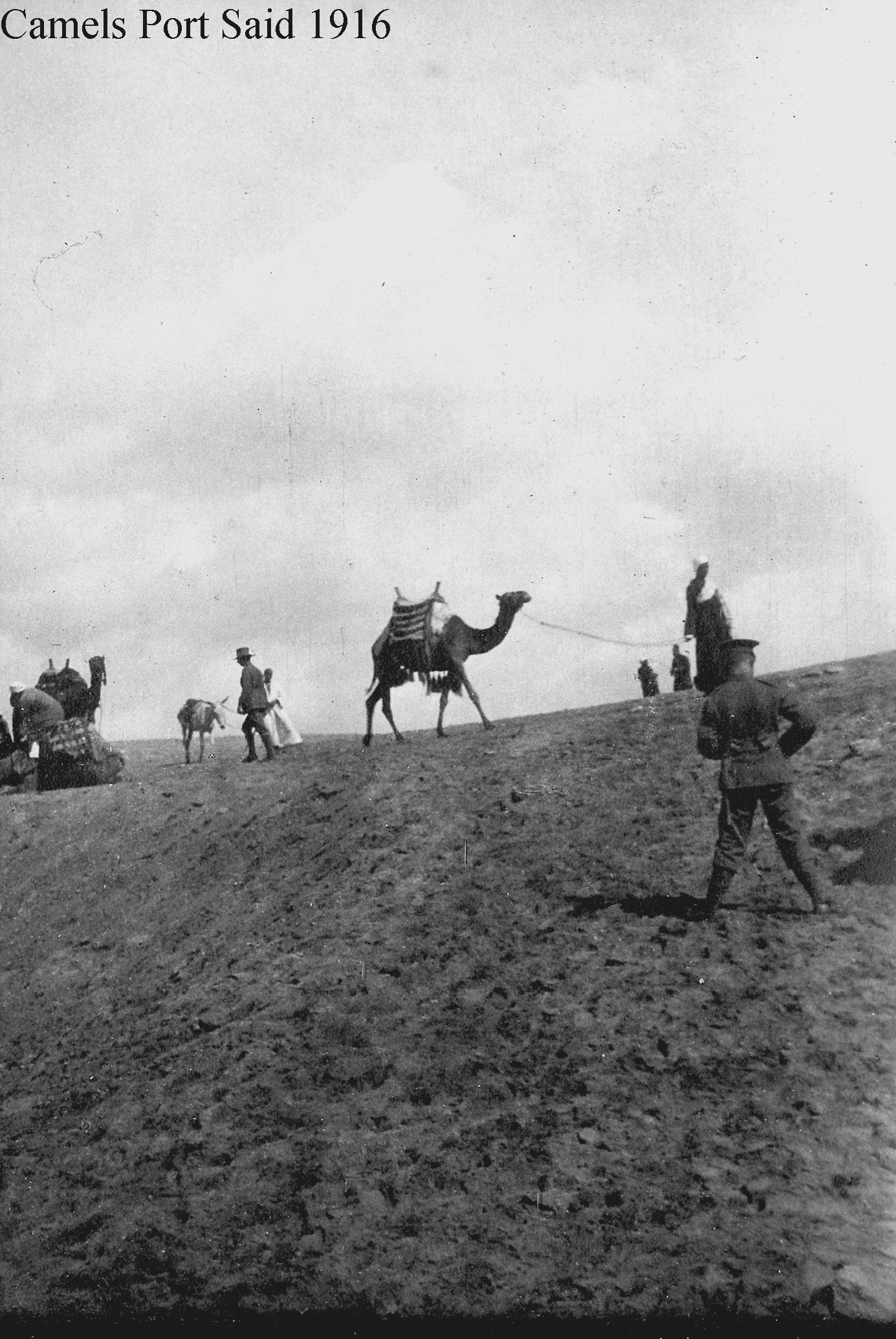
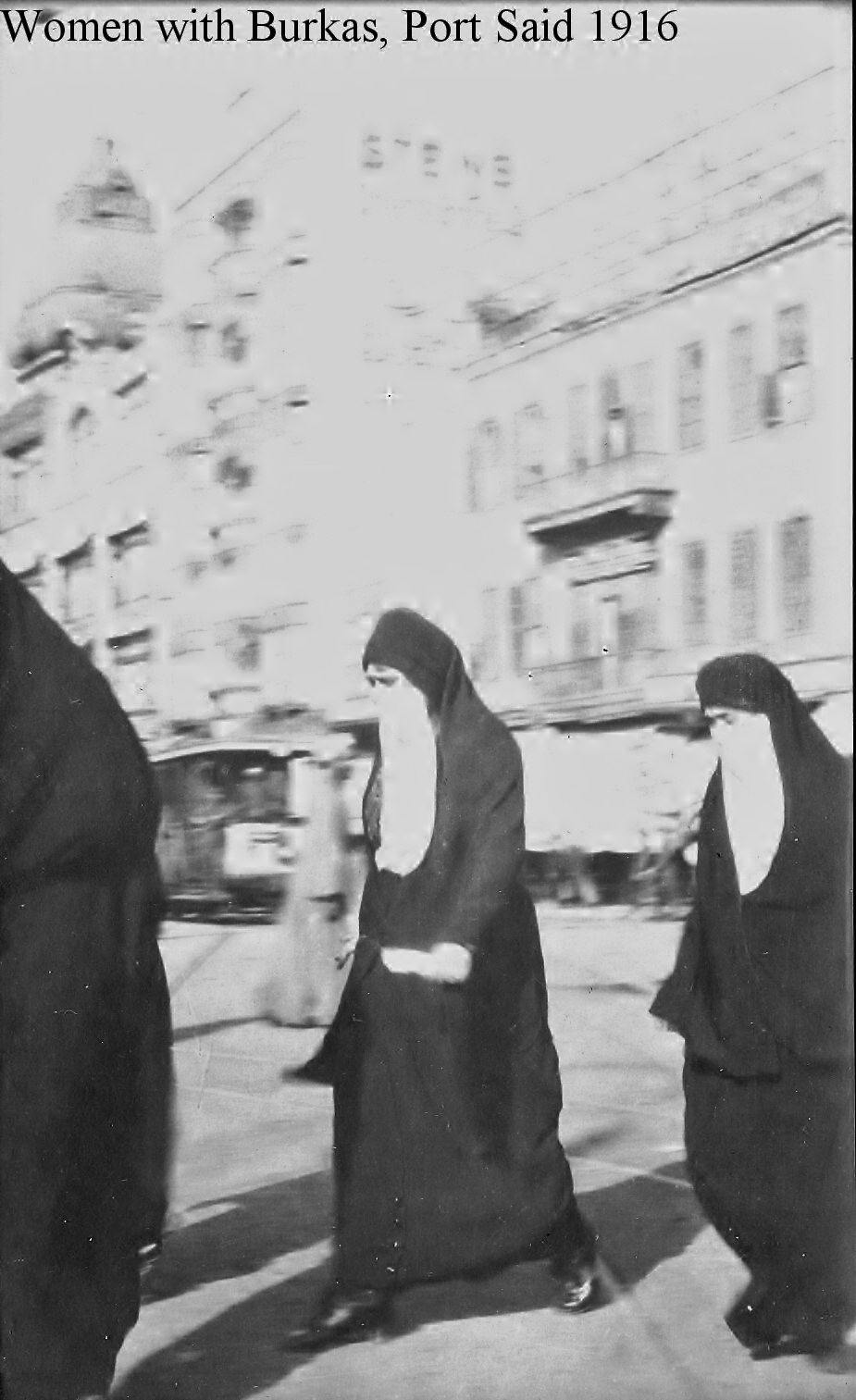
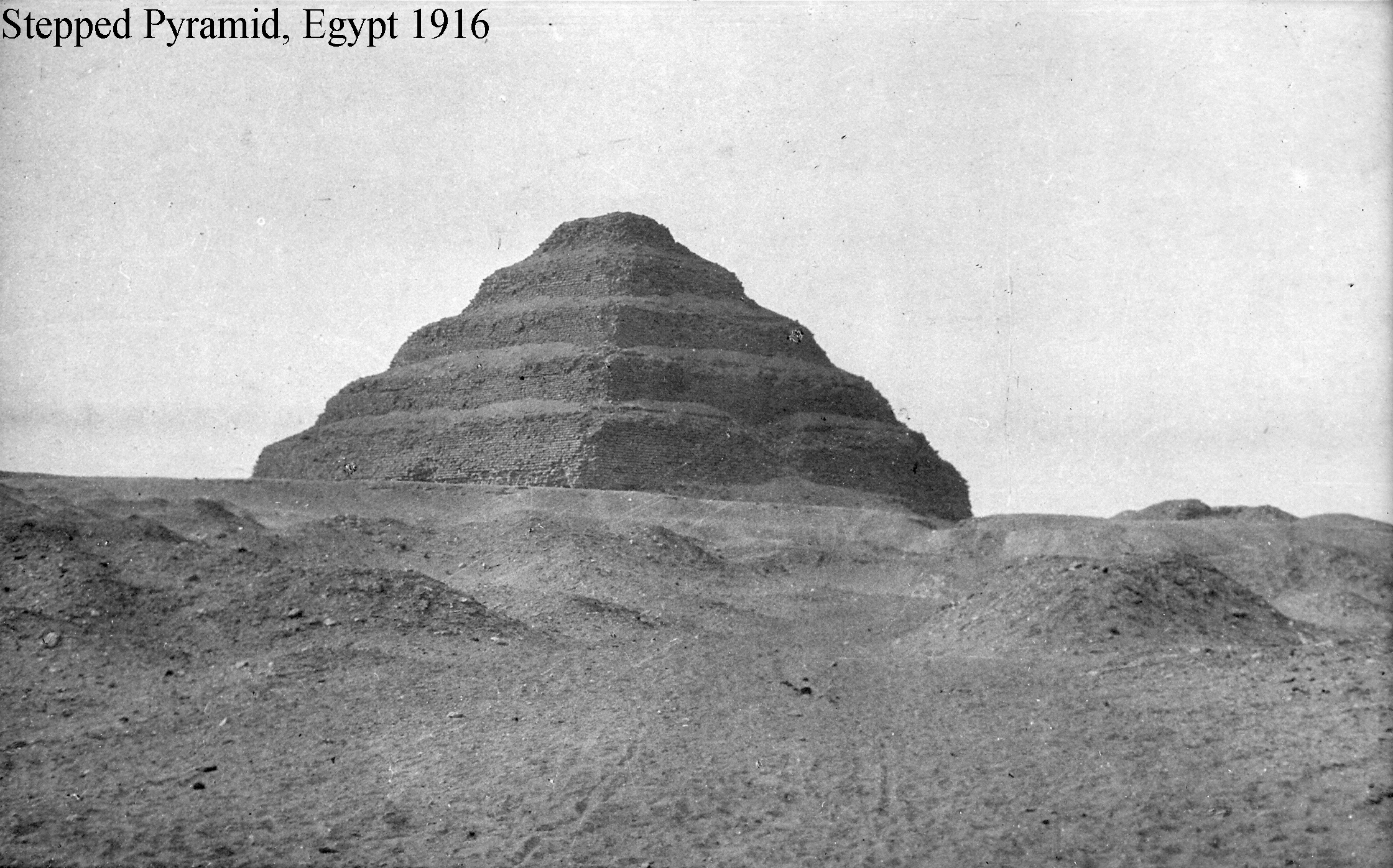
Bill visited Cairo, the Nile Delta, the pyramids as well as many other parts of northern Egypt. I always remember his photographs of Egypt which were framed and hung around our library at home when I was a boy. He also had a brass monkey which had a corkscrew and bottle opener for a tail, and several other small brass pieces which I still have. The brass napkin rings were in regular use at our house throughout my childhood and were used by my children as well.
Late in 1916, my father contracted smallpox and almost died. He credits his friend Phillip Manson-Bahr and the Australian nursing staff of the base hospital in Port Said with saving his life. He was ill for quite some time and was sent back to England to recuperate. He eventually made a full recovery, but the pock mark scars over his whole body, especially his head and neck were with him for the rest of his life. He was so conscious of them that he avoided social company for several years.
After his convalescence and a short leave home, he was assigned to the Cambridge Military Hospital at Aldershot backing up his colleagues in France. A big problem was “Shell Shock” or “Battle Fatigue”. It was believed to be related to the noise of the bursting shells, but now we know that it is more related to the experience of the horrors of war where death is always with you and you could be next. It is now called “Post Traumatic Stress Disorder”.
By the spring of 1917, many of my father’s Hamilton doctor friends were manning the 5th Field Ambulance station just behind the trenches in northern France. The Allies had been stalemated in the line of trenches from the coast in southern Belgium across northern France to the edge of the Alps near the Swiss border. Every attempt to gain ground was very costly to the aggressor. The Allies had had some extremely hard-won successes at Mons, Paschendale, and Ypres, and the Canadians finally conquered Vimy Ridge after other allied armies had failed but the toll in casualties was appalling.
The Allies were losing troops faster than the Germans, and drastic efforts to recruit men of military age were less and less successful. The United States finally came into the war on the side of the Allies in the summer of 1917, but it was the late fall before they had a significant army in Europe and the tide began to turn. By this time, the “Canadian Army Medical Corps” had been formed so my father had been part of both the RAMC and the CAMC during the war. The “Royal” was not added until just before the Second World War. It then became the “Royal Canadian Army Medical Corps” or RCAMC.
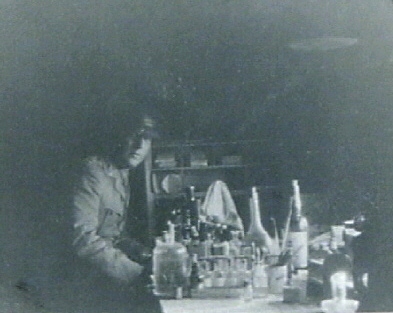
My father was eventually boarded ‘fit for overseas service’ and in August 1917 and was sent to join the British Salonika Force at the “Struma” and “Doiron” fronts on the Bulgarian-Macedonian border. He manned small field laboratories behind the front. In one of his talks to local groups in Hamilton, he describes Salonika and the Struma Front in some detail. He found himself working with a regiment of the Royal Indian Army and the cooks made wonderful curry.
His love of Indian food and the Indian people came from that experience. For many years after the war, he could not get the ingredients for curries in Canada, and I remember that he got a friend in England to send them to him. His favourite was lamb curry. I remember as a child, after we had had a leg of lamb for Sunday dinner, the rest of the roast would be served as curry. The rest of the family thought that it was quite spicy, but my father would have the curry powder beside him at the table so that he could make it even hotter.
There were also British Army regulars of the RAMC. One day he found some edible mushrooms in a field near the base, brought them back to his tent and began to cook them on a primus stove. He recalled overhearing two British officers talking outside the tent. One said: “Can you believe what that silly colonial is doing? He found some fungus out in the field and he’s going to eat it.” The Indian cooks were more sanguine and had mushrooms all the time. Soon they became a delicacy in the mess and he was appointed to keep the supply coming.
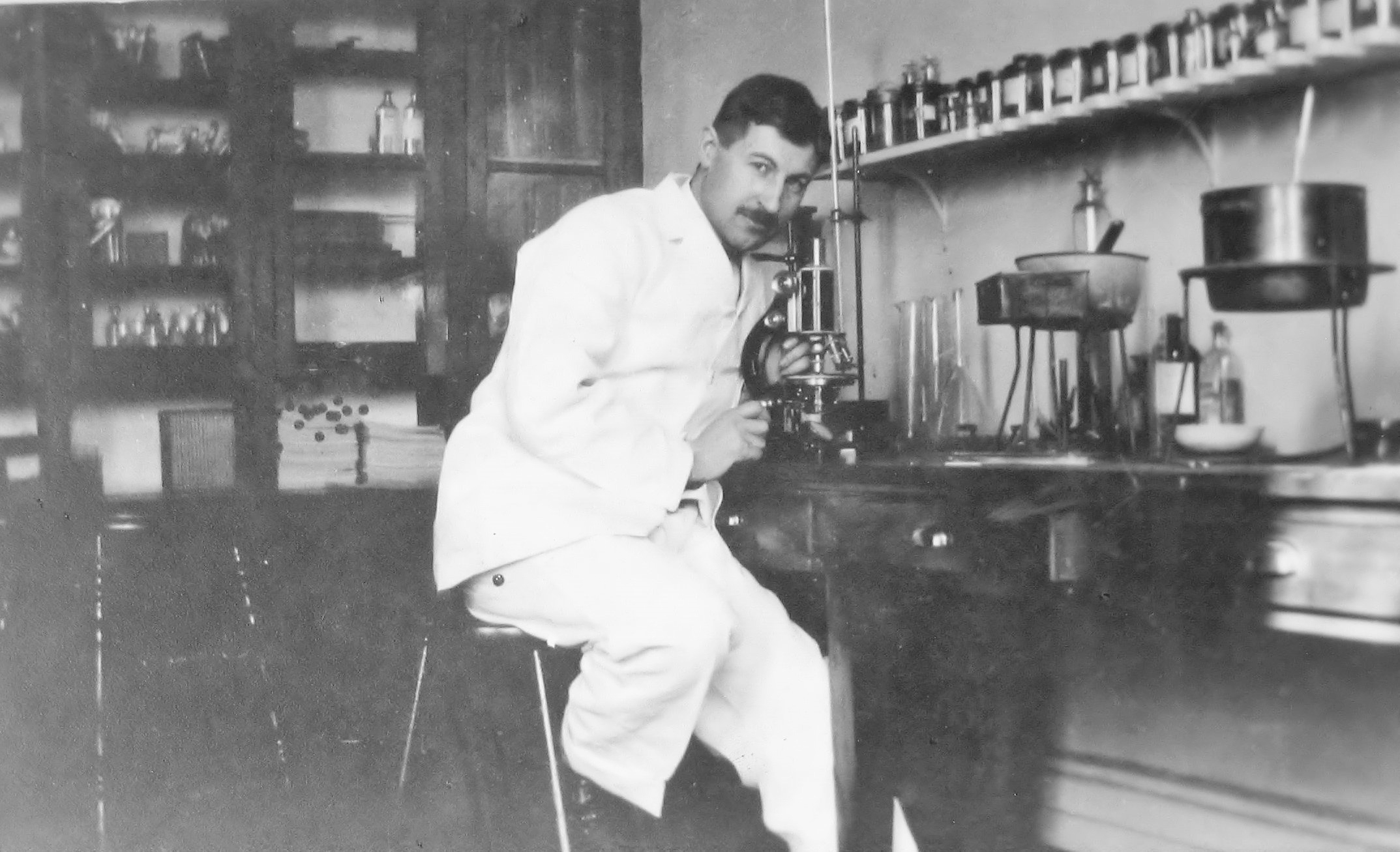
My father described how the Bulgarians sued for peace on September 30th and the armistice for them was six weeks before the formal armistice with Germany which ended the war on November 11th, 1918. Over the next few months, the troops were demobilized home. The London School of Tropical Medicine had offered my father a chance to train there and then join the British Colonial Service in the tropics. But he felt a commitment to the Hamilton City Hospital who had been in touch with him to remind him that they were still holding the job open. He often reflected: “I wonder what would have happened if I had accepted Phillip’s offer?”
Back Home
My father returned to Hamilton in the summer of 1919 to find that his friends from the 5th Field Ambulance were also returning to their practices and re-establishing themselves in civilian life. The “War to end all Wars” was over but not forgotten. I remember that the veterans got together when I was young and talked about the war. Even after the 1939-45 conflict, they never referred to it as “World War I”, or “The Great War”. It was just—the war.
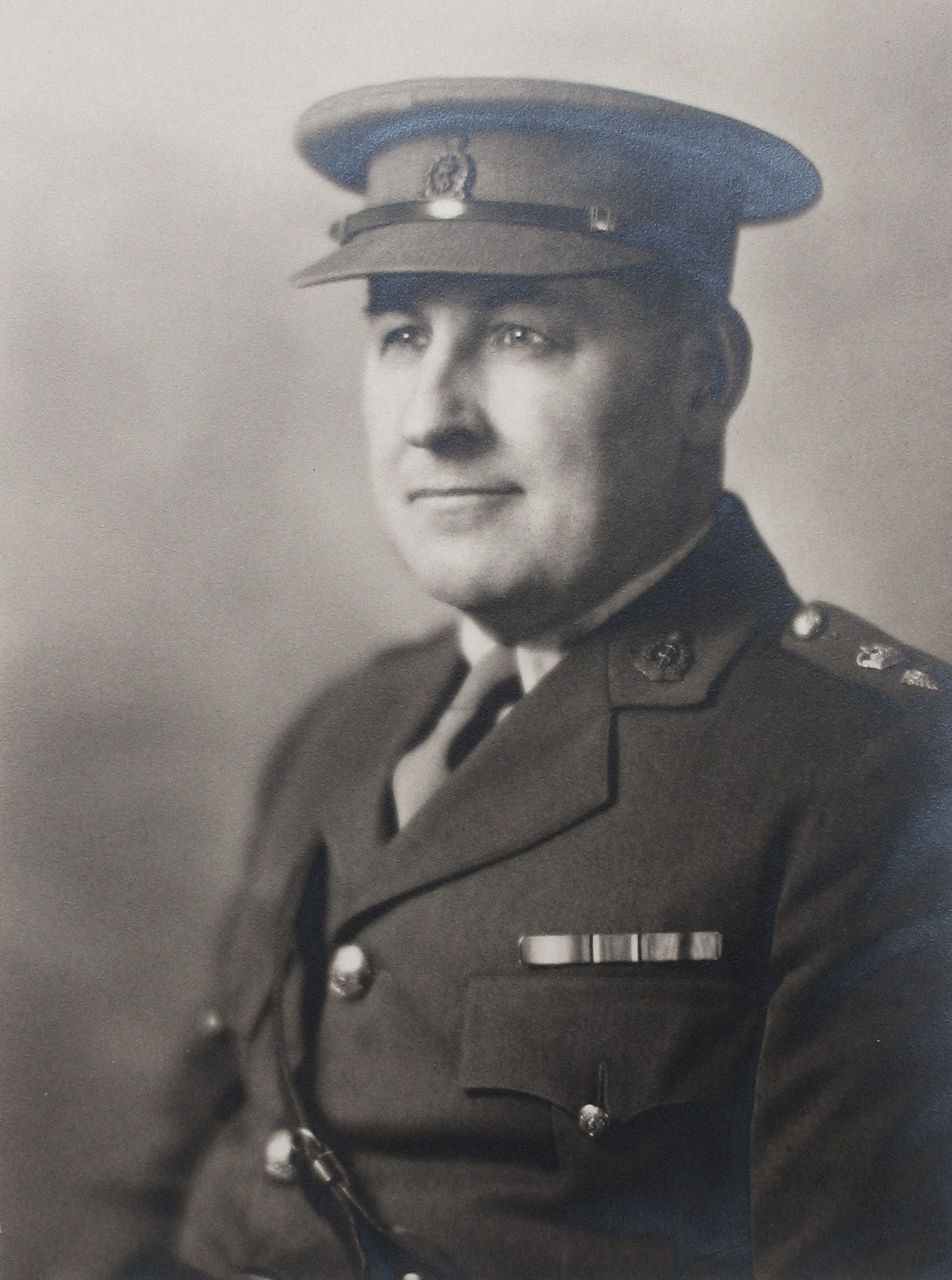
My father was a Captain during the last years of the war. As a Major, and later a Lieut. Colonel, he was Commanding Officer of the Hamilton Medical Company (5th Field Ambulance) in the 1930s. As a young child, I can remember going down with my mother to visit him at the summer camp at Niagara-on-the-Lake. My father continued in the Militia until 1945. The reserve unit still functions as the ‘23rd Medical Company’. In 2003 they were able to change their name to the ‘23rd Field Ambulance,’ honouring the old name. 5th Field Ambulance in the last years of the war in France.
There was Dick Farmer, Crossen Clarke, Donald Warren, Leeming Carr, among the other names I remember. Another friend, Jimmy McLay, brought back a war bride from Belgium and set up practice in Grimsby. He suicided in the late 1920s16 and my parents kept in touch with his widow, who moved to Montreal in the mid-1930s. Jeanine McLay spent Christmas’s with us for many years.
I remember on every November the 11th, my father would be on parade. Even after he no longer could get into his uniform, he still wore his medals. I remember all these friends at our house or meeting at another function to which I was invited. His closest friend, Dan Kapele, had been in the same unit and was always there for him. My closest friend as a child in Hamilton was his son Peter Kapele. More about my escapades with Peter in following chapters.
All of these things i did not understand until later. But when I was married to Fran with three young children, she told the story from an adult perspective and I complained: “How come you never told me about any of this to me then? It was always hush hush.” Mother replied sadly: “Well John, when you were young, it was hush hush. Later, I just assumed you knew”. It is very frustrating the way children are treated – also for children as well.
??
Last revision 20250321
Notes:
1This was the home of the famous author Jane Austen, who lived there mid nineteenth century, although there is no record that the families knew each other.
2 John William was known by the abbreviation Jno. Wm. in official documents. Isabella was known to her family and friends as Bel.
3A note about “Concessions”: Unlike England, where the lots were very irregular and the properties had been there for many centuries, in the Canadas, the first governor, John Graves Simcoe, determined that all the land was to be surveyed in a square grid pattern before it was opened up to settlers. There were some people there before the surveyors came, called squatters, but they were forced to conform their holdings to the new grid system once the survey had been completed. This process continued from about 1785 right through the 19th century as new areas were opened up to settlement. Tecumseth was surveyed in the 1820s after the War of 1812-14 and when new settlers were flowing into Upper Canada at an ever increasing rate.
Townships were laid out, more or less following local topography, and each township was divided into blocks called “concessions” which were the units to be sold or leased to settlers or others who had need of land. A Concession was usually 1000 Acres, and was divided into 10 lots of 100 acres each or in some townships, 5 lots of 200 acres each. In Western Canada the unit of land was a Section which was a square mile, or 640 acres. A concession was larger, and if square, was exactly 1¼ miles to a side. Most townships had square concessions, but in Tecumseth, they were not square. Each concession was 2 miles from north to south and just over ¾ of a mile wide.
5 … as the operators of the new-fangled typing machines were known. They were later called typists and the machine was the typewriter.
6 In 1937 in Ontario it was changed to 8 grades. Bright pupils could often do a form in one year, shortening the process.
7 James Henry, my grandfather’s older brother, had decided to change his name to Dedman, dropping the “a” from the name, trying to avoid the inevitable associations with death.
8 A popular wagon that was light and could carry 2 or 3 people.
9 The 3rd class teacher’s certificate only enabled them to teach in one room rural primary schools. A 2nd class certificate was required for teaching in other primary schools and a 1st class certificate for secondary schools.
10Nineteenth Century Bicycles: The bicycle had undergone great development in the 19th century. The original version, called the velocipede had two wheels the same size, and the rider sat astride it, like a horse, and pushed with his feet on the ground to make it go. Pedals were put on the front wheels. To gain more speed, the front wheel was made bigger, until in the latter half of the century, the front wheel was so large that one needed very long legs to reach the pedals. This design was referred to as the “penny-farthing” because the enormous front wheel and the tiny rear wheel reminded them of a large English penny and a quarter penny, called a farthing, which was smaller than a Canadian 1¢ coin. The contraption was difficult to ride and even more difficult to mount.
By the 1890s, they had gone back to the velocipede style with equal sized wheels, and pedals under the seat driving the rear wheels through sprockets and a chain. This allowed them to increase speed by changing the size of the sprockets, not the wheel. But my father’s version had no free-wheeling and no brakes. That development came later.
11More about Concessions: The most southerly concession line in a township was called the “base line”. Any land along a shoreline which was south of the base line was called the “broken front”. If there was an obstruction such as a body of water or a cliff in the middle of the township, the concession line would continue on the other side, but the portion of road built there may not be connected to the other roads in the township. This would be called a “blind line”.
12A Note about Football: The European game “Football” became known as “Soccer” in North America although recent immigrants from Europe still call it football. The Canadian version of English Rugby became known as “Rugby-Football”, and later as it came to more closely resemble the American game, just “Football”. The original form of Rugby then became known as “Rugger”.
13 The original Trinity College building on Queen Street West was used for other purposes and was still standing when I was working three blocks away at the Ontario Hospital Toronto in the 1960s. I stumbled on it by accident on a lunch time walk one day and thought that I was seeing a mirage – it so closely resembled the building on Hoskin Avenue which I had known while I was at the University of Toronto in the 1950s.
14 The history of the 5th Field Ambulance is documented in a book: Stretcher Bearers…at the Double written by Frederick W. Noyes. It was a limited edition book with contributions from many members of the unit – date of publication probably 1936.
15 Bill started a diary in January 1915 that documents his experiences during that period. It continued until after they had reached Sandling Camp near Folkestone England. The last entry was May 18.
16 …probably as a result of post-traumatic stress disorder.